



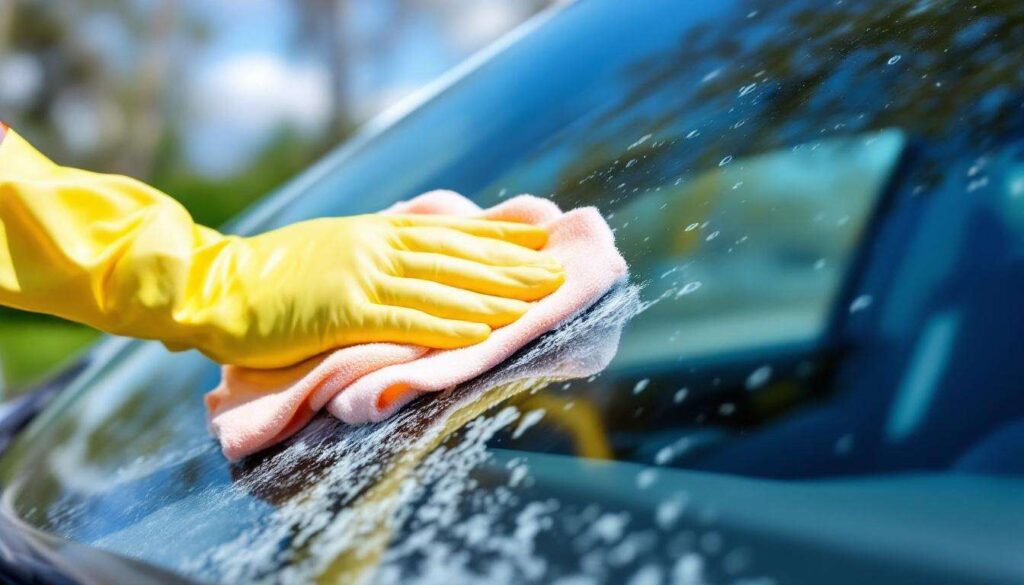
Motorists across the country are discovering that a humble kitchen staple could revolutionise the way they maintain their vehicle’s windscreen. Cleaning experts have long advocated for white vinegar as a powerful, economical alternative to commercial glass cleaners, citing its ability to cut through stubborn grime, remove streaks, and even prevent frost build-up. This natural solution offers remarkable results without the harsh chemicals found in many shop-bought products, making it an increasingly popular choice for drivers seeking clarity and safety on the road.
Why use vinegar to clean your car’s windshield ?
The natural cleaning power of acetic acid
White vinegar contains acetic acid, typically at a concentration of around five per cent, which gives it exceptional cleaning properties. This mild acid works by breaking down mineral deposits, dissolving oily residues, and cutting through the film that accumulates on glass surfaces. Unlike many commercial cleaners that simply spread dirt around, vinegar actually dissolves contaminants at a molecular level, leaving behind a genuinely clean surface.
Cost-effectiveness and environmental benefits
The financial advantages of using vinegar are substantial. A bottle of white vinegar costs a fraction of branded window cleaners, yet provides comparable or superior results. Beyond the economic benefits, vinegar offers significant environmental advantages:
- Biodegradable and non-toxic to aquatic life
- No harmful chemicals released into the atmosphere
- Minimal packaging waste compared to specialised products
- Safe for use around children and pets
Versatility for multiple automotive cleaning tasks
Vinegar’s usefulness extends beyond windscreen cleaning. This versatile solution can tackle various automotive maintenance challenges, from removing water spots on paintwork to eliminating odours from upholstery. Its antibacterial properties also make it effective for sanitising interior surfaces, providing a comprehensive cleaning solution in a single, affordable product.
Understanding how vinegar compares to traditional cleaning products helps explain why so many experts recommend this natural alternative.
Vinegar vs traditional window cleaners
Performance comparison on stubborn residues
Commercial window cleaners often struggle with certain types of windscreen contamination. Road film, consisting of exhaust particles, oil spray, and environmental pollutants, proves particularly challenging for standard products. Many branded cleaners contain surfactants designed to lift dirt, but these can leave behind their own residue, creating a cycle of repeated cleaning. Vinegar, by contrast, chemically neutralises these substances rather than simply moving them around the glass surface.
| Cleaning aspect | Vinegar solution | Commercial cleaners |
|---|---|---|
| Streak removal | Excellent | Variable |
| Residue-free finish | Yes | Often leaves film |
| Cost per application | Pennies | Pounds |
| Environmental impact | Minimal | Moderate to high |
The streak-free advantage
One of the most frustrating aspects of windscreen cleaning is the appearance of streaks, particularly visible in direct sunlight or when driving at night with oncoming headlights. Traditional cleaners often contain additives such as dyes, fragrances, and thickening agents that contribute to streaking. Vinegar’s simple composition eliminates this problem, evaporating cleanly without leaving behind any residual compounds that could impair visibility.
Safety considerations for automotive glass
Concerns occasionally arise about whether vinegar’s acidity might damage automotive glass or surrounding components. Automotive glass is highly resistant to mild acids, and the diluted vinegar solution recommended for cleaning poses no risk to windscreens, seals, or paintwork when used correctly. In fact, some commercial cleaners contain ammonia, which can deteriorate rubber seals and tinted windows over time, making vinegar the safer long-term choice.
Achieving optimal results requires understanding the correct proportions and preparation methods for your vinegar cleaning solution.
How to mix vinegar and water for effective cleaning
The ideal vinegar-to-water ratio
Cleaning experts recommend a one-to-one ratio of white vinegar to distilled water for general windscreen cleaning. This concentration provides sufficient acidity to dissolve contaminants whilst remaining gentle enough for regular use. For particularly stubborn residues, such as tree sap or insect remains, the vinegar concentration can be increased to two parts vinegar to one part water, though this stronger solution should be used sparingly.
Preparation and storage guidelines
Creating your vinegar cleaning solution is straightforward:
- Use a clean spray bottle, preferably one that hasn’t contained other chemicals
- Measure equal parts white vinegar and distilled water
- Shake gently to combine the ingredients
- Label the bottle clearly to avoid confusion
- Store in a cool, dark place to maintain effectiveness
Distilled water is preferable to tap water because it contains no minerals that could leave deposits on the glass. The solution remains effective for several months when stored properly, making it convenient to prepare larger quantities in advance.
Optional additives for enhanced performance
Whilst vinegar and water alone provide excellent results, some cleaning professionals suggest optional additions for specific purposes. A few drops of washing-up liquid can improve the solution’s ability to tackle greasy films, though this should be used sparingly to avoid creating suds. For a more pleasant scent, a small amount of lemon juice can be added without compromising cleaning effectiveness.
Having the right tools alongside your vinegar solution ensures professional-quality results with minimal effort.
Necessary equipment to clean the windshield with vinegar
Essential cleaning materials
Achieving a streak-free windscreen requires more than just the cleaning solution. Microfibre cloths are essential for vinegar-based cleaning, as their fine fibres trap dirt particles rather than spreading them across the glass. Professional detailers recommend having at least two cloths: one for applying the solution and removing heavy soiling, and another for final buffing to achieve a crystal-clear finish.
Recommended tools and accessories
A comprehensive windscreen cleaning kit should include:
- Spray bottle containing vinegar solution
- Two or three high-quality microfibre cloths
- Soft-bristled brush for removing loose debris
- Squeegee for removing excess liquid (optional)
- Step stool or ladder for reaching the centre of large windscreens
- Newspaper for final polishing (traditional but effective)
Material quality considerations
Not all microfibre cloths perform equally. Look for cloths with a high GSM (grams per square metre) rating, typically 300 or above, as these provide superior absorbency and cleaning power. Avoid using paper towels, which can leave lint and may scratch the glass surface. Similarly, ensure your spray bottle has an adjustable nozzle that can produce both a fine mist for light cleaning and a direct stream for targeting specific areas.
With your equipment assembled and solution prepared, the actual cleaning process follows a systematic approach for optimal results.
Effective method for cleaning the exterior of the windshield
Pre-cleaning preparation
Before applying vinegar solution, remove loose debris from the windscreen surface. Use a soft brush or dry microfibre cloth to sweep away dust, pollen, and dead insects. This prevents scratching the glass when you begin wet cleaning. Clean your windscreen in the shade or during cooler parts of the day, as direct sunlight causes the solution to evaporate too quickly, potentially leaving streaks.
Step-by-step application technique
Follow this methodical approach for professional results:
- Spray vinegar solution generously across the entire windscreen surface
- Allow the solution to sit for 30 seconds on heavily soiled areas
- Wipe using horizontal strokes from one side to the other
- Follow with vertical strokes to ensure complete coverage
- Use a clean, dry microfibre cloth to buff the glass
- Inspect the windscreen from multiple angles to identify any remaining streaks
Work systematically from top to bottom to prevent drips from falling onto already-cleaned areas. Pay particular attention to the edges and corners where grime tends to accumulate.
Addressing stubborn contaminants
Certain substances require additional attention. For insect residue, spray vinegar solution directly onto the affected area and let it soak for several minutes before wiping. Tree sap may need gentle scraping with a plastic card before applying vinegar. Water spots, caused by mineral deposits, typically respond well to undiluted vinegar applied with a cloth and rubbed in circular motions.
Beyond achieving immediate clarity, vinegar offers preventative benefits that reduce the frequency of cleaning required.
Preventing fog and frost on your windshield thanks to vinegar
The science behind vinegar’s anti-fogging properties
Condensation forms on windscreens when warm, moist air contacts the cooler glass surface. Vinegar creates a thin, invisible barrier that alters the surface tension of the glass, causing water molecules to spread into a thin, transparent sheet rather than forming obscuring droplets. This effect, whilst temporary, significantly reduces fogging during typical driving conditions.
Application method for fog prevention
To prevent interior fogging, apply a stronger vinegar solution (three parts vinegar to one part water) to the inside of your windscreen in the evening. Wipe thoroughly with a microfibre cloth, ensuring even coverage. The protective effect typically lasts several days, depending on weather conditions and vehicle use. Reapply after cleaning the windscreen or when you notice fogging returning.
Frost prevention technique
Vinegar proves equally effective against frost formation. The evening before freezing temperatures are forecast, spray undiluted white vinegar across the exterior windscreen surface and wipe it evenly with a cloth. The acetic acid lowers the freezing point of any moisture on the glass, preventing ice crystals from forming overnight. This technique works best when temperatures remain above minus five degrees Celsius.
| Prevention type | Vinegar concentration | Application timing | Duration of effect |
|---|---|---|---|
| Interior fogging | 3:1 vinegar to water | Evening or as needed | 3-5 days |
| Frost prevention | Undiluted vinegar | Night before frost | One night |
| Light condensation | 1:1 vinegar to water | After regular cleaning | 1-2 days |
White vinegar represents a remarkable solution for maintaining automotive glass, combining effectiveness, economy, and environmental responsibility. From cutting through stubborn road grime to preventing fog and frost, this natural product delivers results that rival or exceed commercial alternatives. By following the recommended mixing ratios, using appropriate equipment, and applying systematic cleaning techniques, drivers can achieve crystal-clear visibility whilst avoiding harsh chemicals. The preventative properties of vinegar further reduce maintenance requirements, making it an invaluable addition to any vehicle care routine throughout the year.