
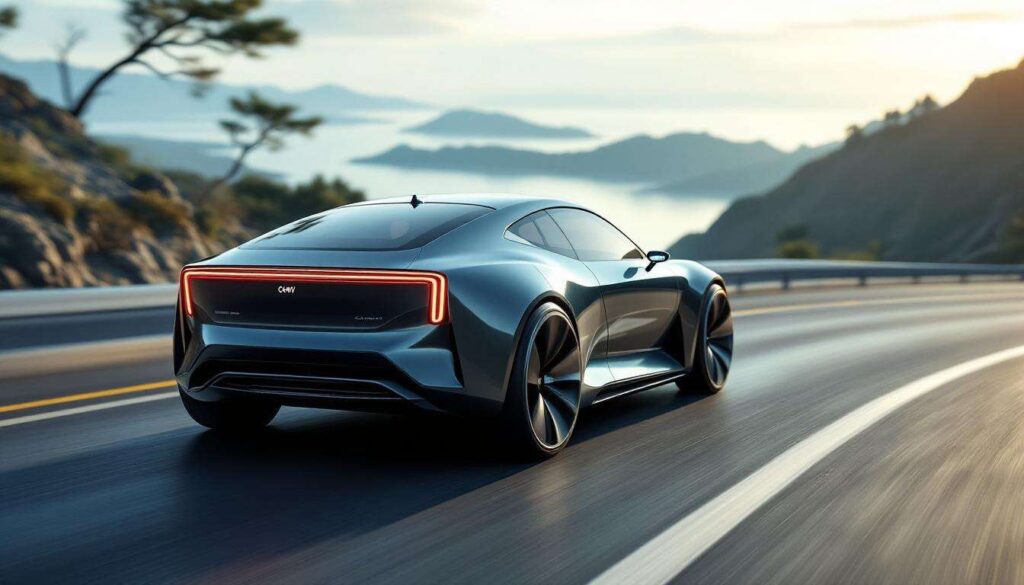
Electric vehicle adoption continues to accelerate globally, yet one persistent concern remains at the forefront of potential buyers’ minds: the fear of running out of power mid-journey. The automotive industry has responded with increasingly sophisticated solutions, and the latest offering from the Huawei-Chery collaboration represents a significant leap forward. Their newly unveiled hybrid electric vehicle, the Luxeed V9, promises to address range anxiety head-on with an impressive 745-mile capability on a single tank. This achievement stems from cutting-edge engineering, including an innovative oxygen generator that optimises the vehicle’s range-extender system. As the automotive landscape shifts towards sustainable mobility, this partnership demonstrates how strategic alliances between technology and manufacturing giants can deliver practical solutions to real-world challenges.
The Huawei-Chery partnership: a strategic alliance in electromobility
The formation of the Harmony Intelligent Mobility Alliance
The collaboration between Huawei and Chery materialised through the Harmony Intelligent Mobility Alliance (HIMA), a strategic framework designed to combine complementary strengths. Chery brings decades of automotive manufacturing expertise and engineering prowess, whilst Huawei contributes its advanced digital technologies, connectivity solutions, and autonomous driving capabilities. This alliance represents the first venture of these two industry leaders into the versatile vehicle segment, marking a deliberate expansion beyond traditional passenger cars.
Complementary expertise driving innovation
The partnership leverages distinct competencies from both organisations:
- Chery’s established chassis development and production infrastructure
- Huawei’s sophisticated software ecosystems and artificial intelligence platforms
- Shared research and development resources for electrification technologies
- Integrated supply chain management for efficient production
This synergy enables the creation of vehicles that seamlessly blend mechanical reliability with digital intelligence, positioning the Luxeed V9 as a testament to what collaborative innovation can achieve in the competitive electric vehicle market.
Understanding the foundation of this partnership provides essential context for appreciating the technological achievements embodied in their debut hybrid offering.
The Huawei-Chery hybrid vehicle: technology and innovation at the service of range
The 800V high-voltage architecture
At the heart of the Luxeed V9’s impressive performance lies an 800V high-voltage platform, representing a significant advancement over conventional 400V systems. This architecture delivers enhanced energy efficiency, faster charging capabilities, and reduced weight through thinner cabling. The higher voltage allows for more efficient power distribution throughout the vehicle’s electrical systems, minimising energy losses during operation.
Range configurations and flexibility
The vehicle offers three distinct pure electric range configurations under WLTC testing conditions:
| Configuration | Pure Electric Range | Total Range (with extender) |
|---|---|---|
| Base | Approximately 98 miles | Up to 745 miles |
| Mid-range | Approximately 118 miles | Up to 745 miles |
| Extended | Approximately 139 miles | Up to 745 miles |
This flexibility allows customers to select a configuration that matches their typical driving patterns whilst maintaining the security of extended range capability for longer journeys.
The Qiankun ADS driving assistance system
Huawei’s proprietary Qiankun ADS represents a sophisticated autonomous driving assistance platform that enhances both safety and efficiency. The system continuously monitors road conditions, optimises energy consumption, and assists drivers in navigating complex traffic scenarios. By intelligently managing acceleration, braking, and route planning, it contributes directly to maximising the vehicle’s operational range.
HarmonyOS integration and connected experience
The smart cabin incorporates HarmonyOS, Huawei’s proprietary operating system, creating a fully connected environment. This integration enables:
- Real-time energy consumption monitoring and optimisation suggestions
- Seamless connectivity with other smart devices and home systems
- Over-the-air updates for continuous improvement
- Intuitive voice control for navigation and vehicle functions
The technological sophistication extends beyond conventional powertrain innovations, but one particular feature stands out as genuinely groundbreaking in addressing range concerns.
The impact of the oxygen generator on range: a detailed analysis
Understanding the oxygen generator technology
The Luxeed V9’s innovative oxygen generator represents a novel approach to optimising range-extender efficiency. This system enhances the combustion process within the range-extender engine by ensuring an optimal oxygen supply, leading to more complete fuel combustion. The result is improved thermal efficiency and reduced fuel consumption, directly contributing to the vehicle’s remarkable 745-mile total range.
Efficiency gains through enhanced combustion
Traditional range-extender systems often operate at suboptimal efficiency due to variations in ambient air quality and altitude. The oxygen generator addresses these limitations by:
- Maintaining consistent oxygen levels regardless of external conditions
- Enabling more precise fuel-air mixture control
- Reducing harmful emissions through complete combustion
- Extending the operational efficiency of the range-extender across diverse environments
Quantifiable benefits for long-distance travel
The practical impact of this technology becomes evident when examining real-world performance metrics. By improving combustion efficiency by even modest percentages, the system delivers substantial range extensions over long journeys. This innovation proves particularly valuable during motorway driving, where sustained speeds traditionally challenge hybrid efficiency.
Whilst technical specifications demonstrate theoretical capabilities, the true measure of any vehicle’s success lies in how it performs during actual use.
Overcoming range anxiety: user experience on a 745-mile journey
The psychological barrier of range limitations
Range anxiety remains one of the most significant obstacles to electric vehicle adoption. Drivers accustomed to conventional vehicles often hesitate when considering electric alternatives, fearing they might become stranded without charging infrastructure. The Luxeed V9 addresses this concern by offering a safety margin that exceeds most daily and weekly driving requirements combined.
Practical advantages during extended travel
A 745-mile range fundamentally transforms the electric vehicle experience:
- Eliminates the need for charging stops on most intercity journeys
- Provides flexibility to deviate from planned routes without anxiety
- Reduces journey planning complexity associated with charging infrastructure
- Offers peace of mind during adverse weather conditions that typically reduce range
Safety features supporting long-distance comfort
Beyond range capabilities, the Luxeed V9 incorporates helmet-style airbags and comprehensive safety systems that make extended journeys more secure. The Qiankun ADS system actively reduces driver fatigue by managing routine driving tasks, allowing occupants to arrive refreshed even after covering substantial distances.
Target demographic and use cases
The vehicle particularly appeals to families and executive customers who require premium comfort alongside practical range. Business travellers conducting regional sales routes, families embarking on holiday journeys, and professionals commuting between cities all benefit from the elimination of range-related compromises.
As impressive as current capabilities appear, the partnership’s ambitions extend well beyond this initial offering.
The future prospects of the Huawei-Chery partnership: towards a new era of vehicles
Market positioning and competitive landscape
The Luxeed V9 enters a fiercely competitive segment within the Chinese market, facing established rivals including the Li Auto Mega, Zeekr 009, and Voyah Dreamer. Each competitor offers distinct advantages, yet the Huawei-Chery collaboration brings unique technological integration that may prove decisive. The combination of proven automotive engineering with cutting-edge digital capabilities creates differentiation that extends beyond simple specification comparisons.
Launch timeline and market entry strategy
Scheduled for official launch during the first quarter of 2026, the vehicle will benefit from continued refinement based on testing feedback. This timeline allows the partnership to:
- Optimise production processes for quality consistency
- Develop comprehensive after-sales support infrastructure
- Build anticipation through strategic marketing initiatives
- Ensure software systems reach full maturity before customer delivery
Expansion potential beyond domestic markets
Whilst initial focus centres on the Chinese market, the international expansion potential remains substantial. European and other Asian markets increasingly demand vehicles that combine electrification with practical range, positioning the Luxeed V9 as a potentially attractive proposition for global customers seeking premium hybrid solutions.
Commercial success, however, must be balanced against broader environmental considerations that increasingly influence consumer decisions.
The hybrid vehicle’s imprint: environment and sustainable mobility
Emissions reduction through hybrid architecture
The Luxeed V9’s hybrid approach delivers meaningful environmental benefits compared to conventional combustion vehicles. By enabling pure electric operation for shorter journeys whilst providing range-extender capability for longer trips, the vehicle significantly reduces overall emissions. The oxygen generator’s contribution to combustion efficiency further minimises harmful pollutants during range-extender operation.
Bridging the transition to full electrification
Hybrid vehicles serve a crucial role in the gradual transition towards complete electrification. They address infrastructure limitations that currently constrain pure electric vehicle adoption whilst delivering immediate emissions reductions. The Luxeed V9 exemplifies this transitional technology, offering customers the environmental benefits of electric driving without the compromises associated with limited charging networks.
Sustainable mobility considerations
True sustainability extends beyond tailpipe emissions to encompass:
- Manufacturing processes and material sourcing
- Battery production environmental impact
- End-of-life vehicle recycling and component reuse
- Total lifecycle carbon footprint assessment
The partnership’s commitment to these broader considerations will ultimately determine the vehicle’s genuine environmental credentials and contribution to sustainable mobility goals.
The Luxeed V9 represents a significant milestone in addressing the practical concerns that have historically limited electric vehicle adoption. Through the strategic alliance between Huawei and Chery, this hybrid offering combines impressive 745-mile range capability with advanced safety features, sophisticated connectivity, and innovative oxygen generator technology. The vehicle’s ability to eliminate range anxiety whilst delivering premium comfort positions it competitively within the luxury electric MPV segment. As the automotive industry continues its transition towards electrification, such practical solutions that balance environmental benefits with real-world usability demonstrate the potential for collaborative innovation to reshape sustainable mobility. The partnership’s success with this initial venture may well establish new benchmarks for hybrid vehicle capabilities and pave the way for further advancements in electromobility technology.