



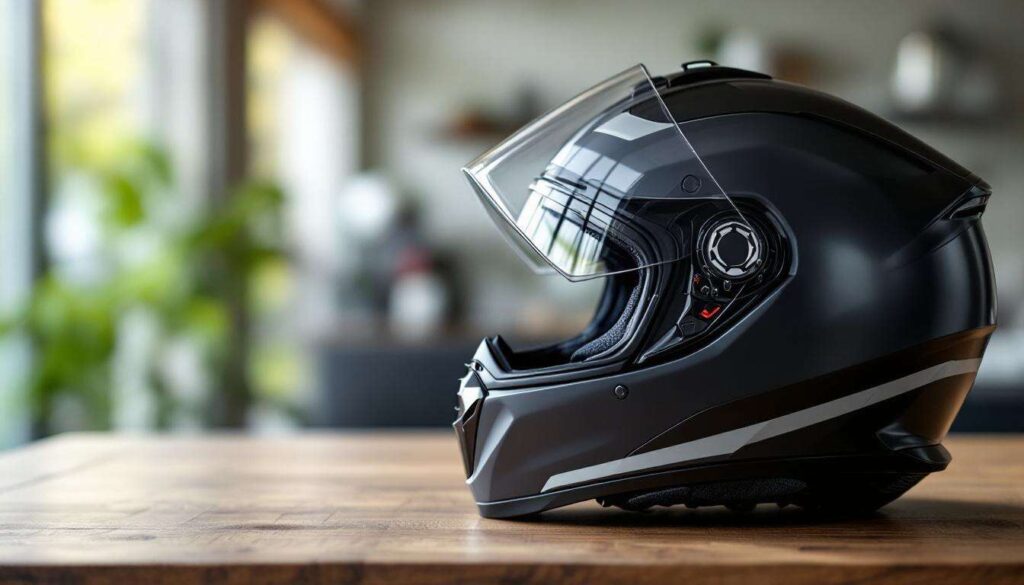
Choosing the right motorcycle helmet can feel overwhelming, especially when confronted with various safety standards and certification marks. Riders often wonder whether they genuinely need the latest approved safety standard or if an older certified helmet will suffice. Understanding what these standards mean, how they’ve evolved, and their real-world implications can help you make an informed decision that balances safety, legality, and budget considerations.
What is the motorcycle helmet safety standard ?
Understanding certification marks and their purpose
A motorcycle helmet safety standard represents a set of rigorous tests and requirements that helmets must pass before being sold to consumers. These standards are established by regulatory bodies to ensure helmets provide adequate protection during impacts, penetration attempts, and various riding conditions. The most common standards include ECE 22.05 and the newer ECE 22.06 in Europe, DOT FMVSS 218 in the United States, and SHARP in the UK.
Each certification mark on a helmet indicates it has undergone specific testing protocols:
- Impact absorption tests at different speeds and angles
- Penetration resistance assessments
- Retention system strength evaluations
- Field of vision measurements
- Chin strap durability testing
Legal requirements across different regions
In the UK and throughout Europe, helmets must carry the ECE certification to be road-legal. Wearing a non-approved helmet can result in fines, penalty points, and potentially invalidate insurance claims. The current legal standard is ECE 22.05, though ECE 22.06 helmets are increasingly available and will eventually replace the older standard entirely.
| Region | Required Standard | Additional Options |
|---|---|---|
| UK/Europe | ECE 22.05/22.06 | SHARP rating |
| United States | DOT FMVSS 218 | Snell M2020 |
| Australia | AS/NZS 1698 | – |
Understanding these standards forms the foundation for evaluating whether upgrading to the latest approved version offers meaningful benefits.
The evolution of safety standards: why is it important ?
Advances in testing methodology
Safety standards evolve because accident research continuously reveals new insights about how head injuries occur. The transition from ECE 22.05 to ECE 22.06 exemplifies this evolution, incorporating lessons learned from decades of real-world crash data. Modern testing protocols now account for rotational forces, which research has shown contribute significantly to brain injuries beyond simple linear impacts.
Key improvements in testing methodology include:
- Multiple impact point testing rather than limited locations
- Oblique impact assessments to measure rotational acceleration
- Enhanced chin bar testing for full-face helmets
- More stringent visor and retention system requirements
- Improved quality control and manufacturing oversight
Real-world accident data driving change
The evolution of standards isn’t arbitrary bureaucracy; it reflects genuine advances in understanding motorcycle accidents. Studies examining thousands of crashes have identified specific failure modes and injury patterns that older standards didn’t adequately address. For instance, research showed that many serious injuries occurred from impacts to areas of the helmet that previous standards tested less rigorously.
This continuous refinement means that helmets meeting newer standards generally offer superior protection, though older certified helmets still provide legally acceptable and reasonably effective protection. The question becomes whether the incremental improvements justify immediate replacement of a helmet that meets previous standards.
The differences between old and new standards
ECE 22.05 versus ECE 22.06 comparison
The shift from ECE 22.05 to ECE 22.06 represents the most significant update to European helmet standards in nearly two decades. Understanding these differences helps riders assess whether upgrading provides tangible safety benefits.
| Feature | ECE 22.05 | ECE 22.06 |
|---|---|---|
| Impact test points | 4 locations | 6 locations including rear |
| Rotational testing | Not required | Mandatory oblique impacts |
| Chin bar testing | Basic | Enhanced with anvil strike |
| Visor requirements | Standard | Stricter optical and impact criteria |
Performance improvements in modern helmets
Helmets designed to meet ECE 22.06 typically incorporate advanced materials and construction techniques that weren’t necessarily required under previous standards. These include multi-density EPS liners that better manage different impact energies, improved shell constructions that distribute forces more effectively, and retention systems engineered to remain secure under more demanding test conditions.
The rotational impact testing particularly represents a major advancement, as this type of force contributes significantly to concussions and traumatic brain injuries. Helmets passing these tests often feature technologies like MIPS (Multi-directional Impact Protection System) or similar solutions that allow slight rotation between the helmet and head during angled impacts.
These technical enhancements naturally lead to considerations about selecting helmets that incorporate the latest safety features.
How to choose a helmet that complies with the latest standard ?
Identifying certification marks and labels
When shopping for a helmet meeting current standards, examine the certification label carefully. This label, typically sewn into the chin strap or attached inside the helmet, displays the approval number and standard version. For ECE certification, look for a label beginning with “E” followed by a number indicating the approving country, then the approval number and standard version (22.05 or 22.06).
Essential checks when examining helmets:
- Verify the ECE label is present and legible
- Check the manufacturing date (usually stamped inside)
- Confirm the standard version matches current requirements
- Look for additional certifications like SHARP ratings
- Ensure the label hasn’t been tampered with or removed
Balancing safety features with personal requirements
Meeting the latest standard doesn’t automatically make a helmet the right choice for every rider. Personal fit remains paramount, as even the safest helmet provides inadequate protection if it doesn’t fit properly. Consider factors including head shape compatibility, weight distribution, ventilation needs, noise levels, and intended use when selecting a helmet.
A properly fitted helmet meeting an older standard like ECE 22.05 offers better protection than an ill-fitting helmet meeting ECE 22.06. Prioritise correct sizing and comfort alongside certification standards to ensure you’ll wear the helmet consistently and it will perform as designed during an impact.
Understanding how helmet choice affects broader considerations like insurance coverage adds another dimension to this decision.
The impact on personal safety and insurance
Insurance implications of helmet standards
Most UK insurance policies require riders to wear helmets meeting current legal standards, which currently means ECE 22.05 or newer. Wearing a non-compliant helmet could potentially affect claim outcomes following an accident, though insurers typically cannot refuse claims solely based on helmet standards if the helmet was legally compliant at the time of the accident.
However, wearing a helmet meeting outdated or no standards could:
- Provide grounds for insurers to reduce compensation
- Complicate claims processes requiring additional evidence
- Result in allegations of contributory negligence
- Affect personal injury protection coverage
Real protection versus regulatory compliance
The distinction between legal compliance and optimal protection matters when considering whether to upgrade. A helmet meeting ECE 22.05 remains legally acceptable and provides substantial protection. The improvements in ECE 22.06 offer enhanced safety margins, particularly for rotational impacts, but don’t render older certified helmets dangerously inadequate.
Personal safety considerations should weigh factors including your riding style, typical speeds, road conditions, and risk tolerance. Aggressive sport riders or those frequently riding on motorways might prioritise the absolute latest safety technology, whilst urban commuters riding at lower speeds might reasonably continue using quality helmets meeting previous standards until replacement becomes necessary for other reasons.
These considerations ultimately feed into the broader question of whether investing in the latest safety technology represents money well spent.
Investing in safety: is it really necessary ?
Cost-benefit analysis of upgrading
Helmets meeting ECE 22.06 typically command premium prices, often £50-150 more than comparable models certified only to ECE 22.05. Whether this investment makes sense depends on your current helmet’s condition, age, and certification status. If your existing helmet is relatively new, fits perfectly, and meets ECE 22.05, immediate replacement purely for the newer standard may not be cost-effective.
Consider upgrading when:
- Your current helmet is approaching five years old
- The helmet has been involved in any impact
- Visible wear or damage appears on shell or liner
- Fit has become compromised due to liner compression
- You’re purchasing a new helmet anyway
Long-term value and protection
The incremental safety improvements in newer standards, whilst genuine, represent evolutionary rather than revolutionary advances. A quality helmet meeting ECE 22.05 still provides excellent protection. However, when purchasing a new helmet, choosing one meeting ECE 22.06 makes sense as it ensures compliance as older standards are phased out and provides the best currently available protection.
Think of helmet standards like vehicle safety features: newer cars offer better protection than older models, but that doesn’t make older vehicles death traps. Similarly, riding with an ECE 22.05 helmet doesn’t constitute reckless behaviour, though upgrading to ECE 22.06 when replacement time arrives offers measurable benefits.
The investment in a quality helmet meeting current standards represents perhaps the most cost-effective safety upgrade available to motorcyclists, considering the potential consequences of head injuries.
Selecting a motorcycle helmet involves balancing legal requirements, safety performance, personal fit, and budget considerations. Whilst the latest ECE 22.06 standard offers measurable improvements over its predecessor, helmets meeting ECE 22.05 remain legally compliant and provide substantial protection. Riders needn’t rush to replace recently purchased helmets solely for the newer certification, but should prioritise ECE 22.06 when purchasing new headgear. Ultimately, wearing any properly fitted, certified helmet consistently matters far more than obsessing over incremental standard differences. Regular replacement every five years, proper fit, and choosing reputable manufacturers ensures optimal protection regardless of whether you select the absolute latest standard.