


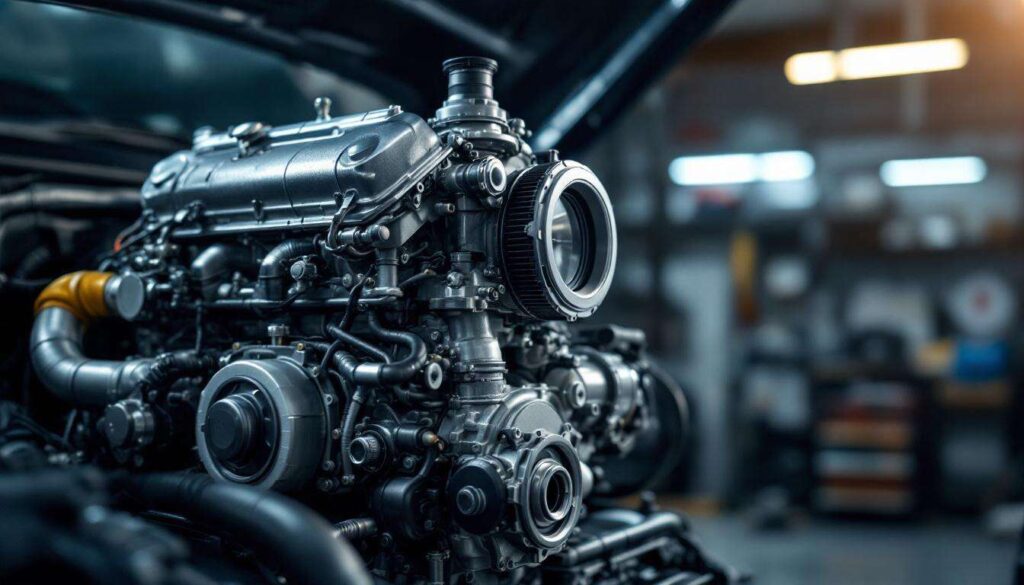
The automotive industry has witnessed a significant shift towards downsizing, with three-cylinder engines becoming increasingly prevalent across vehicle ranges. Manufacturers have promoted these compact powertrains as the solution to rising fuel costs and stringent emissions regulations, promising improved fuel economy without compromising performance. However, as these engines have become mainstream, questions have emerged regarding whether they deliver on their initial promises. Real-world driving experiences and independent testing suggest that the anticipated fuel savings may not materialise as consistently as advertised, prompting consumers and industry observers to scrutinise the actual benefits of this technological direction.
Mass adoption of three-cylinder engines: a strategic choice by manufacturers
The downsizing revolution in the automotive sector
The widespread adoption of three-cylinder engines represents a strategic response to increasingly stringent emissions regulations across global markets. Manufacturers faced mounting pressure to reduce CO2 emissions whilst maintaining competitive performance levels. By reducing the number of cylinders from four to three, engineers achieved significant weight savings and reduced internal friction, theoretically translating into improved fuel efficiency. This approach aligned perfectly with European Union targets and similar regulatory frameworks worldwide.
Economic advantages for manufacturers
Beyond environmental compliance, three-cylinder engines offer substantial production cost benefits for automotive manufacturers. The simplified architecture requires fewer components, reducing both material costs and assembly complexity. Key advantages include:
- Lower manufacturing expenses due to reduced component count
- Simplified supply chain management with fewer parts
- Reduced tooling and production line investments
- Easier integration across multiple vehicle platforms
- Compliance with emissions standards without expensive hybrid systems
These financial considerations have made three-cylinder engines particularly attractive for volume manufacturers seeking to maintain profitability whilst meeting regulatory requirements. The technology has spread rapidly from economy vehicles to mainstream models, with premium brands also embracing the configuration.
Market positioning and consumer perception
Manufacturers have invested heavily in marketing three-cylinder engines as modern and efficient alternatives to traditional four-cylinder units. The messaging emphasised technological advancement and environmental responsibility, positioning these engines as forward-thinking solutions. However, this widespread implementation across vehicle segments raises questions about whether the technology genuinely serves consumer interests or primarily benefits manufacturers’ compliance strategies.
Having examined why manufacturers embraced this technology so enthusiastically, it becomes essential to evaluate whether these engines actually deliver the promised fuel efficiency in real-world conditions.
Actual performance vs promises: questioning fuel efficiency
Laboratory testing versus real-world consumption
The disparity between official fuel consumption figures and actual on-road performance has become a significant concern for three-cylinder engine owners. Whilst laboratory testing under controlled conditions produces impressive numbers, real-world driving often reveals disappointing results. Independent testing organisations have documented substantial differences between claimed and achieved fuel economy.
| Engine type | Claimed consumption (l/100km) | Real-world consumption (l/100km) | Difference (%) |
|---|---|---|---|
| Three-cylinder 1.0L turbo | 4.8 | 6.2 | +29% |
| Four-cylinder 1.4L naturally aspirated | 5.5 | 6.5 | +18% |
Performance compromises affecting efficiency
Three-cylinder engines often require forced induction through turbocharging to compensate for their smaller displacement. Whilst this enhances power output, it can paradoxically increase fuel consumption during spirited driving. The engine must work harder to maintain performance expectations, particularly when:
- Accelerating onto motorways or overtaking slower traffic
- Carrying multiple passengers or luggage loads
- Navigating hilly terrain or mountainous regions
- Operating air conditioning systems in warm weather
- Driving in stop-start urban traffic conditions
Driver behaviour and consumption patterns
The driving style required to achieve optimal fuel economy with three-cylinder engines differs significantly from conventional powertrains. These engines typically deliver their best efficiency within narrow rev ranges, requiring drivers to adapt their habits. Many consumers find themselves pressing the accelerator harder to achieve adequate response, inadvertently negating the theoretical efficiency advantages.
Beyond fuel consumption concerns, the environmental credentials of these engines warrant closer examination to determine their genuine ecological impact.
The impact of three-cylinder engines on the environment: are they truly ecological ?
Carbon dioxide emissions in practice
Whilst three-cylinder engines produce lower CO2 emissions during standardised testing, their real-world environmental impact proves more complex. The gap between laboratory and actual emissions undermines their ecological credentials. Furthermore, the increased use of turbocharging introduces additional considerations regarding manufacturing impact and component longevity.
Particulate matter and NOx emissions
Modern three-cylinder turbocharged engines face challenges regarding particulate emissions and nitrogen oxides. The direct injection systems commonly paired with these engines can produce higher particulate matter under certain operating conditions. Key environmental concerns include:
- Increased particulate emissions during cold starts
- Higher NOx production under heavy acceleration
- Dependency on particulate filters requiring periodic regeneration
- Potential for increased emissions as engines age
Lifecycle environmental assessment
A comprehensive environmental evaluation must consider the entire lifecycle of three-cylinder engines, including manufacturing, operation, and disposal. Whilst they use fewer materials during production, the complexity of turbocharging systems and associated components may offset these gains. The durability and longevity of these engines compared to traditional designs also influences their overall environmental footprint.
Given these environmental considerations, exploring alternative technologies becomes crucial for consumers seeking genuinely efficient and sustainable transport solutions.
What alternatives to three-cylinder engines for better energy efficiency ?
Hybrid powertrains as practical solutions
Hybrid technology combining electric motors with internal combustion engines offers demonstrable fuel economy improvements over three-cylinder engines alone. Full hybrid systems capture energy during braking and provide electric assistance during acceleration, reducing fuel consumption across diverse driving conditions. These systems deliver:
- Consistent fuel savings regardless of driving style
- Reduced emissions in urban environments
- Improved refinement and reduced noise
- Better performance without efficiency penalties
Modern four-cylinder engines with advanced technology
Recent developments in four-cylinder engine technology have produced units that rival or exceed three-cylinder efficiency whilst offering superior refinement. Technologies such as variable compression ratios, cylinder deactivation, and advanced combustion management enable four-cylinder engines to achieve impressive economy figures without the compromises associated with three-cylinder designs.
Electric vehicles as the ultimate efficiency solution
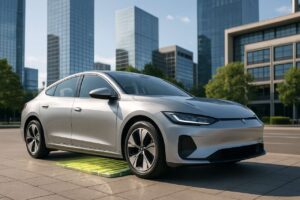
Battery electric vehicles eliminate combustion engine inefficiencies entirely, converting electrical energy to motion with far greater efficiency than any internal combustion configuration. As charging infrastructure expands and battery technology advances, electric vehicles increasingly represent the most effective solution for reducing both fuel costs and environmental impact.
Understanding these alternatives helps consumers make informed decisions, but the financial implications of choosing three-cylinder engines require careful examination.
Cost study: profitability of three-cylinder engines for consumers
Initial purchase price considerations
Vehicles equipped with three-cylinder engines typically command lower purchase prices than equivalent models with larger engines or hybrid powertrains. This affordability attracts budget-conscious consumers seeking modern vehicles with reasonable running costs. However, this initial saving must be weighed against long-term ownership expenses.
Fuel costs and actual savings
The anticipated fuel savings often fail to materialise sufficiently to justify choosing a three-cylinder engine over alternatives. Consumers expecting significant reductions in fuel expenditure frequently discover that real-world consumption diminishes the financial advantage. Over typical ownership periods, the cumulative savings may prove disappointing.
Maintenance and reliability factors
Three-cylinder turbocharged engines present specific maintenance considerations that affect long-term costs:
- Turbocharger replacement costs can be substantial
- More frequent oil changes required for turbocharged units
- Potential for increased wear due to higher specific outputs
- Concerns regarding long-term durability and component longevity
- Higher insurance premiums in some markets
Resale value implications
The residual values of vehicles with three-cylinder engines show mixed results. Some models retain value well, whilst others depreciate more rapidly than four-cylinder equivalents. Consumer perception regarding refinement and desirability influences resale prospects, potentially affecting the total cost of ownership calculation.
These financial realities shape the outlook for three-cylinder engines as the automotive industry continues evolving towards electrification and enhanced efficiency standards.
The future of three-cylinder engines in light of environmental and economic expectations
Regulatory pressures and industry direction
Increasingly stringent emissions regulations and the accelerating shift towards electrification suggest a limited future for three-cylinder combustion engines. Many manufacturers have announced timelines for phasing out internal combustion engines entirely, with three-cylinder units likely to disappear alongside their four-cylinder counterparts. The technology represents a transitional solution rather than a long-term answer to transport challenges.
Consumer acceptance and market trends
Market data indicates mixed consumer reception for three-cylinder engines, with concerns regarding refinement, noise, and vibration influencing purchasing decisions. As hybrid and electric alternatives become more affordable and accessible, the appeal of three-cylinder engines diminishes. Premium manufacturers have already begun retreating from the technology in favour of electrified powertrains.
Technological development priorities
Automotive research and development investment increasingly focuses on electrification technologies rather than further combustion engine refinement. This shift suggests that three-cylinder engines will receive minimal additional development, potentially leaving existing designs without the improvements needed to remain competitive. The industry consensus points towards electric propulsion as the primary efficiency solution moving forward.
Three-cylinder engines emerged as manufacturers’ response to emissions regulations and efficiency demands, promising reduced fuel consumption and environmental benefits. However, the reality has proven more nuanced, with real-world performance often falling short of laboratory promises. Whilst these engines offer initial cost advantages and meet regulatory requirements, their actual fuel efficiency, environmental impact, and long-term value proposition remain questionable. As hybrid and electric alternatives become increasingly viable and affordable, three-cylinder engines appear destined to serve as a brief intermediate technology rather than a lasting solution. Consumers seeking genuine efficiency and environmental responsibility may find better value in hybrid systems or fully electric vehicles, which deliver more consistent and substantial benefits without the compromises inherent in downsized combustion engines.