

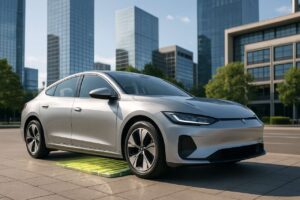


Automotive safety has never been more sophisticated, with cutting-edge technologies and rigorous testing protocols reshaping how manufacturers approach vehicle protection. Modern cars integrate multiple layers of defence, from reinforced structures to intelligent systems that anticipate and mitigate collisions. Understanding which vehicles excel in these areas requires examining comprehensive safety metrics, technological innovations, and real-world performance data that distinguish the most secure options available to consumers.
Car safety criteria in 2026
Structural integrity and crashworthiness
The foundation of vehicle safety begins with structural design, where engineers create crumple zones that absorb impact energy whilst maintaining a rigid passenger compartment. High-strength steel and aluminium alloys form strategic frameworks that redirect collision forces away from occupants. Advanced computer modelling enables manufacturers to simulate thousands of crash scenarios before physical prototypes undergo testing, optimising every structural component for maximum protection.
Occupant protection systems
Modern vehicles deploy comprehensive restraint systems that extend far beyond traditional seatbelts and airbags:
- Multi-stage airbags that adjust deployment force based on collision severity and occupant position
- Side-curtain airbags providing extended coverage for head protection during rollovers
- Knee airbags preventing lower-extremity injuries
- Pre-tensioning seatbelts that activate milliseconds before impact
- Load-limiting technology that reduces chest injuries whilst maintaining restraint
Pedestrian safety considerations
Contemporary safety standards mandate pedestrian protection features including bonnet designs that provide clearance above rigid engine components, energy-absorbing bumpers, and breakaway mounting systems for external fixtures. Some manufacturers incorporate active bonnet lift mechanisms that raise the rear of the bonnet during pedestrian impacts, creating additional cushioning space.
These fundamental criteria establish the baseline for evaluating vehicle safety, but technological advancements have introduced sophisticated systems that actively prevent collisions rather than merely protecting occupants when they occur.
Advanced protection technologies
Autonomous emergency braking systems
The most significant advancement in collision prevention comes from autonomous emergency braking (AEB), which uses radar, cameras, and lidar sensors to detect imminent collisions. These systems monitor traffic patterns, calculate closing speeds, and apply full braking force when drivers fail to respond to hazards. Enhanced versions now recognise pedestrians, cyclists, and even animals, functioning effectively in various lighting conditions including complete darkness.
Adaptive cruise control and lane assistance
Integrated driver assistance packages combine multiple technologies that work synergistically:
| Technology | Primary function | Safety benefit |
|---|---|---|
| Adaptive cruise control | Maintains safe following distance | Reduces rear-end collisions by 40% |
| Lane-keeping assistance | Corrects unintended drift | Prevents run-off-road incidents |
| Blind-spot monitoring | Detects vehicles in adjacent lanes | Eliminates merge-related crashes |
| Cross-traffic alert | Warns of approaching vehicles when reversing | Protects against car park collisions |
Driver monitoring and attention systems
Recognising that driver distraction contributes to numerous accidents, manufacturers have implemented monitoring systems using infrared cameras to track eye movement and head position. When these systems detect drowsiness or inattention, they issue progressive warnings through visual alerts, audible chimes, and even seat vibrations. Advanced implementations can initiate controlled deceleration if the driver remains unresponsive.
Whilst these technologies represent remarkable progress, their effectiveness varies significantly between manufacturers, making brand comparisons essential for informed purchasing decisions.
Comparison of the safest brands
European manufacturers leading safety innovation
Volvo maintains its reputation as a safety pioneer, with every model featuring comprehensive protection systems as standard equipment rather than optional extras. The Swedish manufacturer’s commitment extends to sharing safety research with competitors, prioritising industry-wide improvements over competitive advantage. Mercedes-Benz similarly integrates extensive safety technology across its range, with PRE-SAFE systems that prepare vehicles for imminent collisions by adjusting seats, closing windows, and tensioning seatbelts.
Japanese brands emphasising reliability
Subaru distinguishes itself through EyeSight technology, a dual-camera system providing exceptional object recognition and distance calculation. This approach delivers consistent performance across varied conditions whilst maintaining affordability. Mazda’s i-ACTIVSENSE suite demonstrates that comprehensive safety need not require premium pricing, offering advanced features throughout its model lineup.
Premium brands setting new standards
Luxury manufacturers continue pushing boundaries with experimental technologies:
- BMW’s evasion assistance actively steers around obstacles when braking alone proves insufficient
- Audi’s intersection assistance prevents turns across oncoming traffic
- Genesis integrates highway driving assist combining steering, acceleration, and braking
- Lexus employs predictive safety systems anticipating potential hazards before they materialise
Understanding how these brands implement safety features provides context, but examining specific innovations reveals the mechanisms that deliver protection in critical moments.
Focus on active safety innovations
Predictive collision avoidance
The latest generation of safety systems employs artificial intelligence to analyse traffic patterns and predict potential accidents before they develop. These systems process data from multiple sensors simultaneously, identifying dangerous situations such as vehicles running red lights or pedestrians about to enter the roadway. Machine learning algorithms continuously improve recognition accuracy by studying millions of driving scenarios.
Vehicle-to-everything communication
Emerging V2X technology enables vehicles to exchange information with infrastructure, other cars, and vulnerable road users. This connected safety approach warns drivers about hazards beyond sensor range, including accidents around blind corners, emergency vehicles approaching intersections, and road conditions reported by preceding traffic. Implementation requires coordinated infrastructure investment, but pilot programmes demonstrate substantial safety improvements.
Enhanced night vision and visibility systems
Addressing the elevated accident risk during darkness, manufacturers deploy thermal imaging cameras that detect heat signatures from pedestrians and animals at distances exceeding headlight range. These systems highlight detected objects on dashboard displays or through head-up projections onto windscreens, providing drivers with critical extra seconds to react. Adaptive headlights that pivot with steering input further enhance visibility through curves.
These innovations demonstrate technological capability, but their real-world effectiveness requires validation through rigorous testing protocols that simulate diverse collision scenarios.
Analysis of crash-test results
Euro NCAP assessment methodology
The European New Car Assessment Programme conducts comprehensive evaluations across four categories: adult occupant protection, child occupant protection, vulnerable road user protection, and safety assist systems. Each category receives a percentage score, with overall ratings ranging from zero to five stars. Testing protocols continuously evolve, incorporating new collision types and raising performance thresholds to maintain relevance.
Top-performing vehicles in recent testing
Recent assessment cycles identified several vehicles achieving exceptional results:
| Vehicle | Overall rating | Adult occupant | Child occupant | Safety assist |
|---|---|---|---|---|
| Mercedes-Benz EQS | 5 stars | 96% | 91% | 90% |
| Genesis GV60 | 5 stars | 89% | 87% | 88% |
| Subaru Outback | 5 stars | 94% | 89% | 85% |
Understanding test limitations
Whilst crash testing provides valuable comparative data, standardised protocols cannot replicate every real-world scenario. Variables including collision angles, vehicle speed differentials, and occupant positioning create infinite permutations that testing programmes can only approximate. Statistical analysis of actual accident outcomes complements laboratory results, revealing how vehicles perform across diverse circumstances.
These empirical assessments gain additional significance when considered alongside evolving regulatory frameworks that establish minimum safety requirements and encourage innovation.
Impact of new regulations on safety
Mandatory safety technology requirements
Recent legislative changes mandate specific technologies for all new vehicles, fundamentally altering the safety landscape. Requirements now include intelligent speed assistance, driver drowsiness detection, reversing cameras, and event data recorders. These regulations eliminate the practice of restricting advanced safety features to premium trim levels, ensuring comprehensive protection regardless of price point.
Stricter pedestrian protection standards
Updated regulations impose more demanding pedestrian impact tests, requiring vehicles to minimise injuries across broader impact zones. Manufacturers respond by redesigning front-end structures, incorporating energy-absorbing materials, and eliminating rigid protrusions. These changes particularly benefit vulnerable road users, addressing accident categories where fatalities remain disproportionately high.
Cybersecurity and data protection considerations
As vehicles become increasingly connected, regulations now address digital security to prevent hacking attempts that could compromise safety systems. Standards require secure software architectures, encrypted communications, and regular security updates throughout vehicle lifespans. Privacy protections govern how manufacturers collect, store, and utilise data from onboard systems.
Vehicle safety represents a multifaceted achievement combining structural engineering, electronic systems, regulatory oversight, and continuous innovation. The safest cars excel across all these dimensions, providing occupants with comprehensive protection through passive structures and active technologies. Manufacturers demonstrating consistent commitment to safety research, transparent testing participation, and standard equipment generosity deliver the most secure options. As technologies mature and regulations evolve, the baseline for acceptable safety continues rising, benefiting all road users through reduced accident severity and frequency. Consumers prioritising protection should examine complete safety specifications, independent test results, and manufacturer track records rather than relying solely on marketing claims or star ratings.