


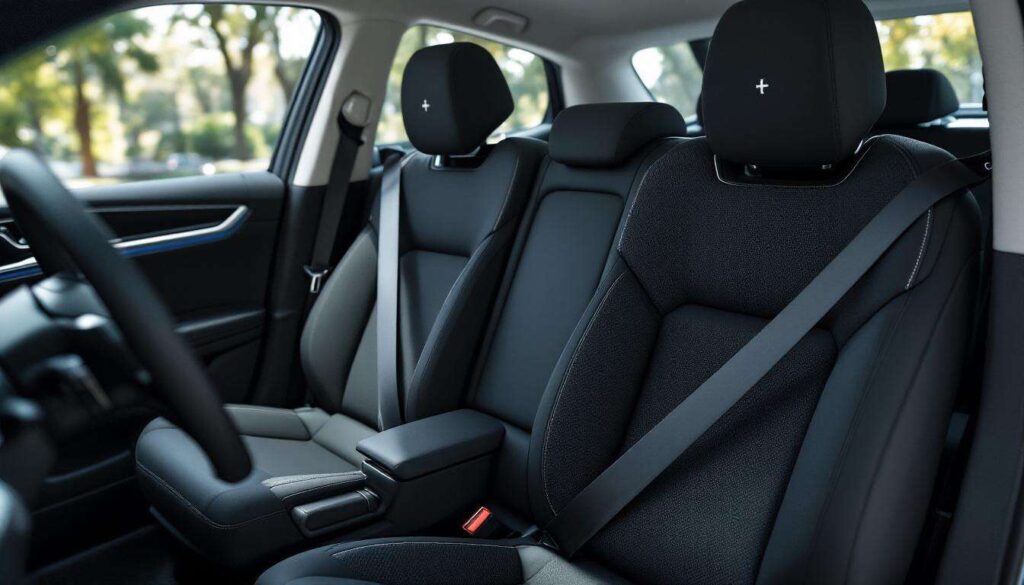
Automotive safety innovation continues to evolve, with manufacturers pushing boundaries to protect occupants during collisions. Volvo, a brand synonymous with pioneering safety features, has unveiled its latest advancement: adaptive seat belts designed to minimise injuries during crashes. These intelligent restraint systems represent a significant leap forward from conventional designs, incorporating sensors and rapid-response mechanisms that adjust tension and positioning milliseconds before impact. By anticipating collision dynamics and tailoring restraint forces to individual occupants, this technology addresses long-standing limitations of standard seat belts, which apply uniform tension regardless of passenger size, seating position, or crash severity.
Introduction to Volvo’s adaptive seat belts
The evolution of seat belt technology
Since Volvo engineer Nils Bohlin invented the three-point seat belt in 1959, restraint systems have undergone numerous refinements. However, traditional designs remain fundamentally reactive, engaging only after a collision begins. Adaptive seat belts mark a paradigm shift by incorporating predictive capabilities that prepare occupants before impact occurs.
Core features of Volvo’s system
Volvo’s adaptive seat belts integrate several advanced components:
- Pre-collision sensors that detect imminent crashes through radar and camera systems
- Variable tension mechanisms that adjust restraint force based on occupant characteristics
- Rapid deployment actuators that position belts optimally within milliseconds
- Integration with vehicle stability systems for comprehensive crash anticipation
This multi-layered approach ensures restraints respond appropriately to diverse collision scenarios, from frontal impacts to side collisions and rollovers. The system’s intelligence lies in its ability to differentiate between emergency braking and actual crashes, preventing unnecessary activation whilst maintaining split-second responsiveness when needed.
Understanding how these components work together reveals the sophisticated engineering behind this life-saving innovation.
How Volvo’s new seat belts work
Pre-collision detection and activation
The system continuously monitors vehicle surroundings using forward-facing radar and cameras integrated into Volvo’s safety suite. When sensors detect an unavoidable collision, they calculate impact severity, angle, and time-to-contact. This information triggers the adaptive seat belt system approximately 300 milliseconds before impact—a critical window that allows mechanical adjustments to complete before forces reach their peak.
Personalised restraint adjustment
Unlike conventional belts that apply identical tension to all occupants, adaptive systems tailor responses based on:
- Occupant weight and height detected through seat sensors
- Seating position and recline angle
- Predicted collision severity and direction
- Presence of vulnerable passengers such as elderly occupants or pregnant women
Electric motors within the seat belt retractors adjust webbing tension dynamically, tightening sufficiently to secure occupants without causing excessive chest compression. For smaller occupants, reduced force prevents rib fractures and internal injuries, whilst larger passengers receive adequate restraint to prevent excessive forward motion.
Post-collision management
After initial impact, the system intelligently releases tension to prevent secondary injuries from prolonged compression. This controlled release maintains occupant position whilst reducing pressure on the thorax and abdomen, minimising bruising and soft tissue damage that often occurs with traditional belts that remain locked after deployment.
These sophisticated mechanisms directly address injury patterns that have persisted despite conventional safety technology.
Reducing injuries: a major issue for Volvo
Current injury statistics
Despite significant safety improvements, seat belt-related injuries remain prevalent. Research indicates that approximately 30% of properly restrained occupants sustain injuries attributable to the restraint system itself, including:
| Injury Type | Percentage of Cases | Typical Severity |
|---|---|---|
| Chest wall injuries | 45% | Moderate to severe |
| Abdominal trauma | 25% | Moderate |
| Shoulder injuries | 20% | Minor to moderate |
| Neck strain | 10% | Minor |
Volvo’s commitment to eliminating fatalities
Volvo’s stated ambition is that no one should be killed or seriously injured in a new Volvo vehicle. This goal drives continuous innovation in restraint technology. Adaptive seat belts represent a crucial step towards this vision by addressing the dual challenge of preventing ejection whilst minimising restraint-induced trauma.
Vulnerable population protection
Certain demographics face disproportionate injury risks from conventional restraints. Elderly occupants with reduced bone density, children in booster seats, and pregnant women require specialised protection that standard belts cannot provide. Adaptive systems recognise these vulnerabilities and modify restraint forces accordingly, potentially reducing serious injuries in these groups by up to 40%.
Achieving these injury reductions requires sophisticated technology working seamlessly behind the scenes.
The technologies behind adaptive seat belts
Sensor integration and artificial intelligence
Adaptive seat belts rely on comprehensive sensor networks that extend beyond traditional crash detection. These include:
- Pressure-sensitive seat cushions that determine occupant mass distribution
- Capacitive sensors in belt webbing that measure chest expansion and breathing patterns
- Accelerometers that detect sudden vehicle deceleration
- Gyroscopic sensors monitoring vehicle orientation during rollovers
Artificial intelligence algorithms process this data in real-time, learning from thousands of crash scenarios to optimise restraint deployment. Machine learning enables the system to improve prediction accuracy over time, adapting to individual driving patterns and environmental conditions.
Mechanical actuation systems
Electric pretensioners replace traditional pyrotechnic devices, offering several advantages. Unlike explosive pretensioners that activate once and remain locked, electric systems provide reversible, variable tension. Brushless motors can cycle tension multiple times during complex collisions involving multiple impacts or vehicle rotation, maintaining optimal restraint throughout the event.
Integration with vehicle architecture
Adaptive seat belts function as part of Volvo’s holistic safety ecosystem, communicating with autonomous emergency braking, stability control, and airbag systems. This integration ensures coordinated responses where braking reduces collision severity whilst restraints prepare occupants simultaneously. The system also interfaces with external vehicle-to-vehicle communication networks, potentially receiving collision warnings from other vehicles before onboard sensors detect danger.
These technological advances deliver measurable improvements over previous restraint generations.
Comparison with traditional seat belts
Response timing differences
| Feature | Traditional Seat Belts | Adaptive Seat Belts |
|---|---|---|
| Activation timing | After impact begins | 300ms before impact |
| Tension adjustment | Fixed/binary | Continuously variable |
| Occupant customisation | None | Weight, position, vulnerability |
| Post-crash release | Locked until manual release | Intelligent progressive release |
Injury reduction performance
Crash test data demonstrates that adaptive systems reduce chest compression by approximately 25% compared to conventional belts in frontal collisions. Abdominal loading decreases by up to 30%, particularly benefiting smaller occupants and pregnant women. Head excursion—the distance the head travels forward during impact—reduces by 15%, lowering concussion risk.
Limitations of conventional systems
Traditional seat belts operate on a one-size-fits-all principle that cannot accommodate physiological diversity. A belt tension adequate for a 90-kilogram adult male may prove excessive for a 50-kilogram female, potentially causing rib fractures. Conversely, insufficient tension for larger occupants allows dangerous forward movement. Adaptive systems eliminate these compromises by tailoring responses to individual circumstances.
Beyond individual vehicle safety, these innovations contribute to broader transportation improvements.
Impact of adaptive seat belts on road safety
Projected casualty reductions
Safety researchers estimate that widespread adoption of adaptive restraint technology could prevent approximately 15,000 serious injuries annually across Europe alone. When combined with other advanced safety systems, the cumulative effect approaches Volvo’s zero-casualty vision. Insurance industry analyses suggest that vehicles equipped with adaptive seat belts demonstrate 20% lower injury claim rates compared to conventionally equipped models.
Regulatory and industry implications
Volvo’s innovation may influence future safety regulations. The European New Car Assessment Programme already incentivises advanced restraint systems through higher safety ratings. As adaptive technology matures and costs decrease, regulatory bodies may establish minimum performance standards that effectively mandate such systems in new vehicles.
Challenges to widespread implementation
Despite clear benefits, several obstacles hinder universal adoption:
- Higher manufacturing costs compared to conventional systems
- Increased vehicle electrical system complexity and potential failure points
- Need for specialised maintenance and diagnostic capabilities
- Consumer awareness gaps regarding adaptive technology benefits
Addressing these challenges requires continued engineering refinement, economies of scale in production, and comprehensive education initiatives targeting both consumers and repair professionals.
Volvo’s adaptive seat belt technology represents a fundamental reimagining of occupant restraint, moving from reactive to predictive protection. By intelligently adjusting to individual occupants and collision characteristics, these systems significantly reduce injuries whilst maintaining the fundamental life-saving function of traditional belts. As this technology matures and proliferates across vehicle segments, it promises to deliver substantial public health benefits, bringing the automotive industry closer to eliminating traffic fatalities. The integration of artificial intelligence, sophisticated sensors, and variable mechanical systems demonstrates how traditional safety equipment can evolve to meet contemporary challenges, setting new benchmarks for occupant protection that will likely influence vehicle design for decades to come.