



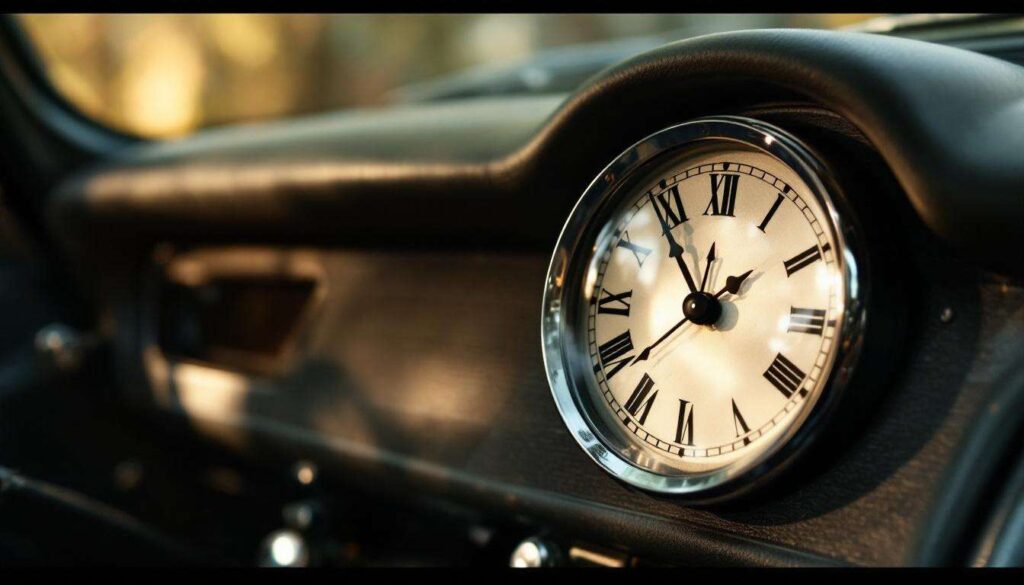
The dashboard of a motor vehicle serves as more than a functional interface between driver and machine. It represents a carefully curated blend of technology, design philosophy, and brand identity. Amidst the proliferation of digital displays and touchscreen interfaces, a surprising number of manufacturers continue to incorporate analog timepieces into their instrument panels. These mechanical or quartz-driven clocks stand as deliberate statements of craftsmanship, offering a tactile connection to horological traditions whilst surrounded by cutting-edge automotive technology. Their presence speaks to something deeper than mere timekeeping: a commitment to aesthetic refinement and an acknowledgement that not all progress requires the abandonment of proven elegance.
The Timeless Elegance of Analog Clocks in the Automotive Industry
A Heritage Rooted in Luxury and Precision
The inclusion of analog clocks in automobiles traces back to an era when mechanical precision represented the pinnacle of engineering achievement. Early luxury manufacturers recognised that discerning customers appreciated fine craftsmanship in all its forms, from engine components to cabin appointments. The analog clock became a symbol of this attention to detail, often crafted by renowned watchmakers and positioned prominently on the dashboard.
These timepieces were never merely functional additions. They served as focal points of interior design, drawing the eye with polished bezels, intricate hands, and carefully selected typography. The gentle sweep of a second hand or the satisfying click of a minute marker provided sensory feedback that digital displays cannot replicate.
The Aesthetic Contribution to Interior Design
Modern automotive designers face the challenge of balancing technological advancement with visual harmony. Analog clocks offer several aesthetic advantages:
- They create visual symmetry in dashboard layouts, often positioned centrally between digital displays
- Their circular form provides contrast against the rectangular screens that dominate contemporary interiors
- The use of premium materials such as brushed metal, mother-of-pearl, or guilloché patterns elevates perceived quality
- They introduce movement and life into static cabin environments through the motion of hands
The presence of an analog clock immediately signals a manufacturer’s commitment to traditional luxury values, suggesting that the vehicle prioritises refinement over pure technological spectacle.
Psychological Impact on the Driving Experience
Research into human-machine interaction reveals that analog instruments can reduce cognitive load during certain tasks. The brain processes analog information differently than digital readouts, often requiring less conscious effort to interpret. A glance at clock hands provides an intuitive sense of time passage that numbers alone cannot convey. This subtle difference contributes to a more relaxed driving environment, particularly during long journeys where constant digital stimulation may prove fatiguing.
The continued presence of these mechanical timepieces in high-end vehicles reflects broader consumer preferences, but their recent resurgence in modern designs suggests something beyond mere nostalgia.
The Revival of Analog Clocks in Modern Cars
Renewed Interest from Manufacturers
After a period during which digital displays threatened to eliminate analog instruments entirely, several prestigious marques have deliberately reintroduced or maintained mechanical clocks in their latest models. This revival coincides with a broader cultural appreciation for analogue craftsmanship across various industries, from vinyl records to mechanical wristwatches.
Manufacturers have recognised that younger affluent buyers, far from dismissing analog elements as outdated, often view them as authentic luxury markers that distinguish premium vehicles from mass-market offerings dominated by screens.
Integration with Digital Ecosystems
Contemporary analog clocks in vehicles represent sophisticated engineering achievements in their own right. Many feature:
- Automatic synchronisation with GPS time signals for perfect accuracy
- Self-adjusting mechanisms for time zone changes during travel
- Illumination systems that adapt to ambient lighting conditions
- Shock-resistant movements designed specifically for automotive environments
| Feature | Traditional Analog | Modern Analog |
|---|---|---|
| Time Accuracy | ±30 seconds/month | GPS-synced (perfect) |
| Adjustment | Manual | Automatic |
| Durability | Moderate | Enhanced shock resistance |
| Illumination | Fixed backlighting | Adaptive brightness |
This technological sophistication ensures that analog clocks deliver both aesthetic appeal and practical functionality without compromise.
Certain manufacturers have made analog timepieces central to their brand identity, creating instantly recognisable design signatures that transcend individual model lines.
Iconic Car Models Retaining Analog Clocks
Rolls-Royce: The Pinnacle of Horological Integration
Rolls-Royce Motor Cars maintains an unwavering commitment to analog clocks across its entire range. The self-winding mechanical clock featured in models such as the Phantom and Ghost represents collaboration with prestigious watchmakers, employing movements typically found in luxury timepieces. These clocks incorporate power reserve systems that wind automatically through vehicle motion, ensuring perpetual operation without battery dependence.
The positioning of the Rolls-Royce clock at the dashboard’s centre creates a focal point that reinforces the marque’s philosophy: technology should serve elegance, not dominate it.
Bentley: Craftsmanship Meets Performance
Bentley’s approach to analog timekeeping extends beyond mere inclusion. The manufacturer offers Breitling-designed chronographs as optional equipment in models like the Continental GT, featuring complications such as stopwatch functions and dual time zones. These instruments acknowledge the brand’s motorsport heritage whilst maintaining its luxury credentials.
The integration of these complex timepieces demonstrates that analog instruments can deliver functionality rivalling digital alternatives when properly engineered.
Porsche: Sporting Tradition
Porsche’s iconic five-dial instrument cluster, featuring a centrally positioned analog chronograph in models like the 911, represents one of automotive design’s most recognisable layouts. This arrangement has remained fundamentally unchanged for decades, creating visual continuity across generations whilst accommodating modern digital information displays in the surrounding dials.
Other Notable Examples
Additional manufacturers maintaining analog clock traditions include:
- Mercedes-Benz: IWC-designed clocks in S-Class and Maybach models
- Jaguar: Traditional analog timepieces in XJ and F-Type variants
- Aston Martin: Jaeger instruments in DB11 and DBS Superleggera
- Land Rover: Rugged analog clocks in Defender and Range Rover
The persistence of these timepieces across diverse brands and market segments suggests they fulfil multiple strategic purposes beyond simple decoration.
Reasons for Their Presence in Contemporary Luxury Cars
Differentiation in a Homogenised Market
As automotive technology becomes increasingly standardised, with similar infotainment systems and digital displays appearing across multiple brands, manufacturers seek distinctive elements that communicate unique identity. An analog clock, particularly one developed in partnership with a renowned watchmaker, provides immediate visual differentiation that cannot be easily replicated through software updates or licensing agreements.
Tangible Craftsmanship in an Intangible Age
Luxury consumers increasingly value physical craftsmanship in an era dominated by digital experiences. An analog clock represents:
- Visible mechanical complexity that can be appreciated without technical knowledge
- Artisanal finishing techniques such as guilloché, sunburst patterns, or hand-applied markers
- Materials selection that demonstrates quality through weight, texture, and visual richness
- Longevity and repairability that contrast with disposable digital components
These qualities align with luxury marketing narratives emphasising heritage, permanence, and value retention.
Emotional Connection and Brand Storytelling
Analog clocks facilitate emotional connections between owners and vehicles by evoking memories of classic automobiles and traditional watchmaking. This nostalgic resonance proves particularly effective with buyers who appreciate historical continuity and view their vehicles as extensions of personal identity rather than mere transportation appliances.
Manufacturers leverage these timepieces in marketing materials to reinforce narratives about craftsmanship, attention to detail, and respect for tradition.
Practical Considerations
| Advantage | Description |
|---|---|
| Glanceability | Easier to read peripherally without focusing attention |
| Reliability | Functions independently of digital system failures |
| Timelessness | Does not appear dated as digital interfaces age |
| Resale Value | Contributes to perceived quality in secondary market |
These functional benefits complement the aesthetic and emotional justifications, creating a comprehensive rationale for continued inclusion.
Beyond individual model applications, analog clocks have become integral to how certain manufacturers present themselves to the marketplace.
How Analog Clocks Shape the Identity of Car Manufacturers
Visual Signatures and Brand Recognition
Certain automotive marques have elevated their analog clocks to the status of signature design elements instantly recognisable even to casual observers. The Rolls-Royce clock’s positioning and finishing, the Porsche chronograph’s placement within the five-dial layout, and the Bentley-Breitling partnership all function as brand identifiers that communicate values without requiring badging or nameplate visibility.
This visual consistency across model ranges and generations creates powerful brand equity that digital displays, frequently updated with each new model cycle, cannot replicate.
Heritage Marketing and Lineage
Manufacturers with extensive histories leverage analog clocks to establish visual continuity between contemporary models and celebrated predecessors. When a modern vehicle incorporates design cues from classic examples, including analog instrumentation, it creates a tangible link to heritage that appeals to enthusiasts and collectors.
This strategy proves particularly effective for brands positioning themselves as custodians of automotive tradition rather than pure technology companies.
Collaborations with Watchmakers
Partnerships between automotive and horological manufacturers create mutually beneficial brand associations:
- Car manufacturers gain credibility in craftsmanship and precision engineering
- Watch brands access affluent automotive enthusiasts as potential customers
- Both benefit from co-marketing opportunities and limited edition collaborations
- The partnership reinforces luxury positioning for both entities
These relationships extend beyond simple supplier arrangements to become strategic alliances that shape brand perception across industries.
As automotive technology continues its relentless march towards complete digitalisation, the question arises whether analog clocks can maintain their presence or will eventually succumb to obsolescence.
The Future of the Analog Clock in a Digital World
Challenges from Advancing Technology
The proliferation of configurable digital displays presents both opportunities and threats to analog timepieces. Modern screens can simulate analog clock faces with perfect accuracy whilst offering additional functionality such as multiple time zones, calendar information, and integration with navigation systems. Some manufacturers now offer digital representations of analog clocks that can be customised to owner preferences, potentially reducing the justification for mechanical alternatives.
Sustainability and Lifecycle Considerations
Environmental regulations and corporate sustainability commitments may influence future decisions regarding analog clocks. Considerations include:
- Manufacturing complexity and associated carbon footprint
- Use of rare materials in high-end movements
- Repairability versus replacement economics
- Lifecycle assessment compared to digital alternatives
However, the longevity and repairability of quality mechanical timepieces may ultimately prove more sustainable than digital components requiring periodic replacement as technology advances.
Evolving Consumer Preferences
Generational shifts in luxury consumption patterns will significantly influence analog clock retention. Younger affluent buyers demonstrate appreciation for craftsmanship and authenticity, suggesting continued demand for tangible luxury markers. Simultaneously, expectations for technological sophistication and connectivity may pressure manufacturers to allocate dashboard space to larger screens and additional functionality.
The Hybrid Approach
| Strategy | Implementation | Examples |
|---|---|---|
| Coexistence | Analog clock alongside digital displays | Current Bentley, Rolls-Royce models |
| Retractable | Analog clock concealed behind screen when not needed | Concept vehicles |
| Optional Equipment | Analog clock as premium upgrade | Mercedes-Benz IWC option |
| Digital Simulation | Configurable analog-style display | Various manufacturers |
These approaches suggest that analog clocks will likely persist in premium segments, potentially becoming more exclusive as they transition from standard equipment to distinguishing luxury options.
The analog clock in contemporary automobiles represents far more than a simple timekeeping device. It embodies manufacturer commitments to craftsmanship, serves as a differentiating design element in an increasingly homogenised market, and provides tangible evidence of attention to detail that resonates with discerning buyers. Whilst digital technology continues advancing, the persistence of mechanical and quartz timepieces across multiple prestigious marques suggests they fulfil psychological, aesthetic, and strategic purposes that screens cannot replicate. Their future likely involves evolution rather than extinction, remaining as deliberate luxury markers in vehicles where tradition and innovation coexist harmoniously.