

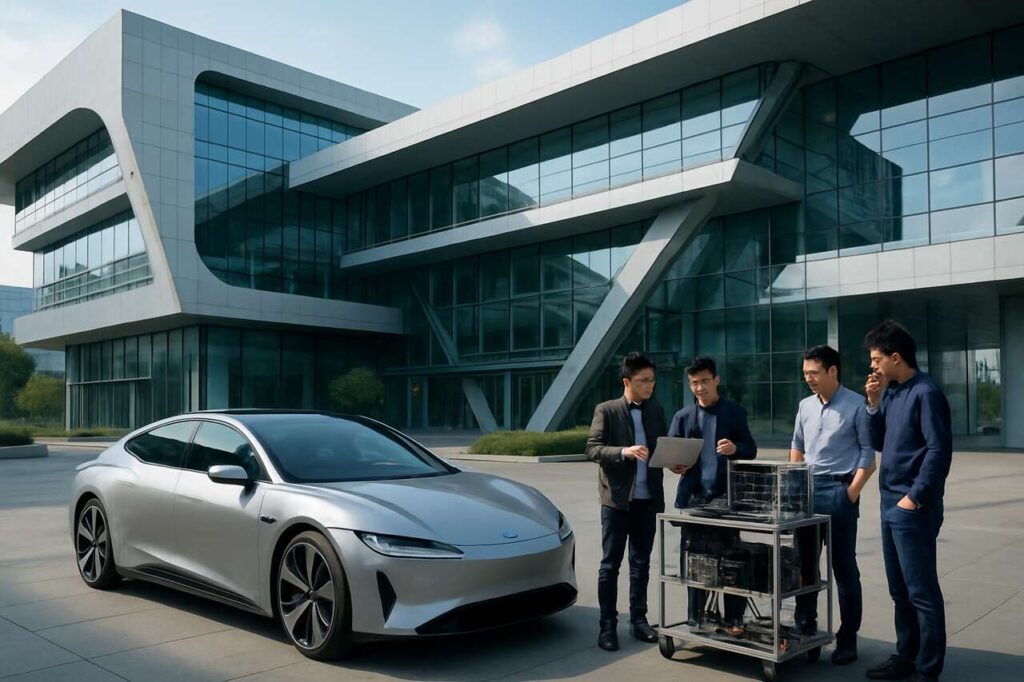
The electric vehicle industry is witnessing a remarkable transformation driven by a new generation of Chinese technology start-ups. These innovative companies are challenging established automotive manufacturers with cutting-edge designs, advanced technologies, and competitive pricing strategies. From battery technology breakthroughs to autonomous driving capabilities, Chinese entrepreneurs are redefining what consumers can expect from electric vehicles. Their rapid ascent has captured global attention, positioning China not merely as a manufacturing hub but as a genuine innovation centre in the automotive sector.
The rise of Chinese start-ups in electric vehicles
Government support and strategic planning
Chinese electric vehicle start-ups have benefited enormously from comprehensive government backing that extends far beyond simple financial subsidies. The Chinese government has implemented a multi-layered support system designed to accelerate the development of new energy vehicles. This includes substantial research grants, tax incentives for both manufacturers and consumers, and preferential access to manufacturing licences that traditionally proved difficult to obtain in the tightly controlled automotive sector.
The strategic importance of electric vehicles within China’s broader economic planning cannot be overstated. Authorities have identified the sector as crucial for:
- Reducing dependence on imported petroleum and enhancing energy security
- Addressing severe urban air pollution in major cities
- Positioning Chinese companies as global technology leaders
- Creating high-value employment in advanced manufacturing
Access to capital and venture funding
The availability of substantial venture capital has enabled Chinese electric vehicle start-ups to scale rapidly. Both domestic and international investors have poured billions into promising companies, recognising the enormous potential of the Chinese market. This financial backing has allowed start-ups to invest heavily in research and development, attract top engineering talent, and establish sophisticated manufacturing facilities within remarkably short timeframes.
Beyond traditional venture capital, many start-ups have secured funding from established technology giants and automotive manufacturers seeking to diversify their portfolios. This cross-industry investment has facilitated knowledge transfer and accelerated innovation cycles. The financial ecosystem supporting these ventures demonstrates how China’s tech sector and manufacturing capabilities are converging to create formidable competitors in the global automotive landscape.
The new players in the Chinese automotive market
Prominent start-up brands reshaping the industry
Several Chinese electric vehicle start-ups have emerged as serious contenders in the automotive market. Companies such as NIO, XPeng, and Li Auto have established themselves as household names within China whilst expanding their international presence. These manufacturers have differentiated themselves through distinctive brand identities that appeal particularly to younger, tech-savvy consumers who prioritise connectivity and innovation over traditional automotive heritage.
| Company | Founded | Key differentiator | Market position |
|---|---|---|---|
| NIO | 2014 | Battery swapping technology | Premium segment |
| XPeng | 2014 | Advanced autonomous driving | Mid to premium |
| Li Auto | 2015 | Extended-range electric vehicles | Family-oriented premium |
Founder backgrounds and entrepreneurial vision
The founders of these start-ups typically come from technology backgrounds rather than traditional automotive engineering. This different perspective has proven instrumental in reimagining vehicle design and functionality. Many founders previously worked in internet companies, bringing expertise in software development, user experience design, and digital ecosystems. Their approach treats vehicles as sophisticated computers on wheels rather than mechanical products with added digital features.
This technology-first mentality has enabled rapid iteration and continuous improvement through over-the-air software updates, a concept borrowed directly from smartphone and computer industries. Understanding how these entrepreneurial visions translate into tangible products requires examining the specific innovations these companies have introduced.
Technological innovations and futuristic design
Battery technology and charging solutions
Chinese start-ups have pioneered innovative approaches to addressing range anxiety and charging infrastructure challenges. NIO’s battery swapping stations represent a particularly bold solution, allowing drivers to exchange depleted batteries for fully charged ones in approximately three minutes. This infrastructure-intensive approach requires substantial investment but eliminates lengthy charging times that many consumers cite as barriers to electric vehicle adoption.
Beyond swapping technology, Chinese manufacturers have invested heavily in battery chemistry improvements and thermal management systems. Many companies have developed proprietary battery packs that optimise energy density whilst maintaining safety standards. Partnerships with battery manufacturers such as CATL have yielded cells with extended lifespans and faster charging capabilities, pushing the boundaries of what electric vehicles can achieve in real-world conditions.
Autonomous driving and artificial intelligence
The integration of advanced driver assistance systems has become a defining feature of Chinese electric vehicles. XPeng’s navigation-guided pilot system demonstrates sophisticated autonomous driving capabilities on Chinese highways, whilst continuously improving through machine learning algorithms that analyse data from the entire fleet. This collective learning approach accelerates development compared to individual vehicle testing.
Artificial intelligence extends beyond driving functions into the cabin experience. Voice-activated controls, facial recognition for personalised settings, and predictive maintenance alerts showcase how these vehicles function as intelligent companions rather than mere transportation tools. The emphasis on connectivity and smart features reflects consumer preferences in the Chinese market, where digital integration is expected across all aspects of daily life. These technological advances naturally require efficient production methods to reach consumers at accessible price points.
Strategies for reducing production costs
Vertical integration and supply chain control
Chinese electric vehicle manufacturers have adopted vertical integration strategies that give them greater control over production costs and quality. By bringing critical components in-house or establishing close partnerships with suppliers, these companies reduce reliance on external vendors and capture more value within their operations. This approach contrasts with traditional automotive manufacturers who typically outsource extensively.
The advantages of vertical integration include:
- Faster development cycles through direct coordination between design and manufacturing teams
- Cost savings by eliminating supplier margins on key components
- Greater flexibility to modify specifications without renegotiating supplier contracts
- Enhanced quality control throughout the production process
Manufacturing efficiency and automation
State-of-the-art manufacturing facilities equipped with extensive automation enable Chinese start-ups to achieve production efficiencies that rival established manufacturers. Robotic assembly lines, automated quality inspection systems, and just-in-time inventory management reduce labour costs and minimise waste. These modern facilities, built from scratch without legacy constraints, incorporate best practices from various industries.
The relatively lower labour costs in China compared to Western markets provide an additional competitive advantage, though this gap has narrowed as wages have risen. More significantly, the concentration of automotive suppliers within China creates logistical efficiencies that reduce transportation costs and lead times. This manufacturing prowess must be balanced against environmental considerations that increasingly influence consumer choices and regulatory frameworks.
Environmental impact and sustainable development
Emissions reduction and air quality improvements
The transition to electric vehicles addresses critical environmental challenges facing Chinese cities, where air pollution has reached hazardous levels. By eliminating tailpipe emissions, electric vehicles contribute directly to improved urban air quality, particularly when deployed in dense metropolitan areas. This environmental benefit has driven both government policy and consumer adoption, creating a virtuous cycle that accelerates the shift away from internal combustion engines.
However, the overall environmental impact depends significantly on the electricity generation mix powering these vehicles. China’s continued reliance on coal-fired power plants means that electric vehicles charged with grid electricity may produce substantial indirect emissions. Start-ups are increasingly addressing this concern by partnering with renewable energy providers and incorporating solar charging capabilities into their infrastructure networks.
Circular economy and battery recycling
Forward-thinking Chinese manufacturers are developing comprehensive battery lifecycle management programmes to address the environmental challenges posed by lithium-ion batteries. These initiatives include second-life applications where automotive batteries with diminished capacity are repurposed for stationary energy storage, extending their useful life before recycling becomes necessary.
Battery recycling technologies are advancing rapidly, with companies investing in processes that recover valuable materials such as lithium, cobalt, and nickel. These recovered materials can be reintegrated into new battery production, reducing the environmental impact of mining operations and creating a more sustainable supply chain. As these environmental credentials strengthen, Chinese manufacturers are positioning themselves to compete directly with established Western brands on the global stage.
The international competition against Western giants
Market expansion strategies beyond China
Chinese electric vehicle start-ups are aggressively pursuing international expansion, recognising that long-term success requires presence in multiple markets. European countries have become primary targets due to stringent emissions regulations and strong government support for electric vehicle adoption. NIO has established operations in Norway, whilst other manufacturers are exploring entry into additional European markets.
These expansion efforts face considerable challenges, including:
- Establishing brand recognition in markets dominated by established manufacturers
- Building service and charging infrastructure networks from scratch
- Navigating complex regulatory requirements that vary by jurisdiction
- Overcoming consumer scepticism about unfamiliar brands
- Managing geopolitical tensions that may affect market access
Competitive advantages and market positioning
Chinese start-ups compete on multiple dimensions against Western manufacturers. Price competitiveness remains a significant advantage, with Chinese vehicles often offering comparable features at lower price points than European or American alternatives. This value proposition appeals particularly to cost-conscious consumers and fleet operators seeking to electrify their operations economically.
Beyond pricing, Chinese manufacturers emphasise technological sophistication and connectivity features that resonate with younger demographics. The integration of advanced driver assistance systems, sophisticated infotainment platforms, and continuous software improvements creates a compelling alternative to traditional luxury brands. As battery costs decline and manufacturing scales increase, the competitive pressure on Western manufacturers will intensify, potentially reshaping the global automotive hierarchy.
Chinese technology start-ups have fundamentally altered the electric vehicle landscape through innovative designs, advanced technologies, and competitive pricing strategies. Government support and abundant capital have enabled rapid development, whilst vertical integration and manufacturing efficiency have reduced production costs. These companies are addressing environmental challenges through emissions reduction and battery recycling programmes, positioning themselves as responsible corporate citizens. Their expansion into international markets presents formidable competition to established Western manufacturers, signalling a significant shift in global automotive dynamics. The continued evolution of these start-ups will likely determine the future direction of personal transportation worldwide.