


The automotive industry stands on the brink of a transformative era as autonomous driving technology advances from concept to consumer reality. Traditional electric vehicles have long dominated headlines, but the emergence of purpose-built autonomous platforms signals a fundamental shift in vehicle design philosophy. The latest development from tensor represents not merely an incremental improvement but a complete reimagining of personal transportation, where artificial intelligence dictates every aspect of the vehicle’s architecture rather than being retrofitted into existing designs.
Introduction of the Tensor robocar: a revolution at CES 2026
A purpose-built autonomous platform
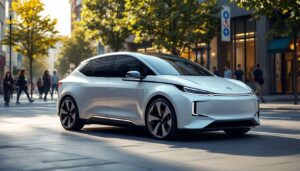
The tensor Robocar made its debut at CES 2026 as the world’s first personal Level 4 autonomous vehicle designed specifically for private ownership. Unlike conventional electric vehicles adapted for self-driving capabilities, this robocar embodies an AI-first philosophy where autonomy drives every design decision. The vehicle’s SUV-sized platform showcases exceptional aerodynamic efficiency with a drag coefficient of 0.253, strategically accommodating the extensive sensor arrays and computing hardware required for genuine autonomous operation.
Nine years of development expertise
The company’s commitment to autonomous technology spans over nine years of intensive research and development. This dedication has earned tensor one of California’s first driverless testing permits for passenger vehicles, demonstrating regulatory confidence in their approach. The Robocar represents the culmination of this extensive development period, integrating lessons learned from real-world testing into a cohesive platform ready for consumer deployment.
Redefining vehicle ownership
Key distinguishing features include:
- Complete elimination of human intervention requirements within designated operational zones
- Autonomous parking and vehicle summoning capabilities
- Stowable steering wheel and retractable pedals for lounge-style interior transformation
- Seamless integration between manual and autonomous driving modes
This comprehensive approach to autonomous vehicle design establishes new standards for what consumers should expect from self-driving technology, moving beyond assisted driving features to genuine autonomy.
AI-oriented architecture: a technical breakthrough
Unified autonomy stack integration
The Robocar’s AI-centric architecture represents a fundamental departure from traditional automotive design. Every system—computing, sensors, steering, and braking—functions as an integrated component of a unified autonomy stack. This holistic approach ensures seamless communication between subsystems, enabling rapid adaptation to changing driving conditions and eliminating the latency issues that plague retrofitted autonomous systems.
Computing power specifications
At the heart of the Robocar lies an extraordinary computing platform:
| Component | Specification | Capability |
|---|---|---|
| Processing units | Eight NVIDIA DRIVE AGX Thor system-on-chips | 8,000 TOPS combined |
| Architecture | Blackwell GPU architecture | Real-time sensor data processing |
| System integration | Unified autonomy stack | Cohesive operation across all systems |
Adaptive intelligence capabilities
This computing infrastructure enables the vehicle to process vast quantities of sensor data instantaneously, making split-second decisions that mirror or exceed human reaction times. The adaptive intelligence continuously learns from operational data, refining its decision-making algorithms to handle increasingly complex scenarios. Such computational prowess transforms the vehicle into a genuine supercomputer on wheels, capable of managing the immense data flows required for safe autonomous operation.
The technical foundation established by this AI-oriented architecture creates the necessary framework for implementing comprehensive safety measures throughout the vehicle.
Safety and large-scale autonomy: redundancy at the heart of the system
Multi-layered redundancy framework
Safety considerations permeate every aspect of the Robocar’s design through comprehensive redundancy systems. The vehicle employs fully redundant brake-by-wire and steer-by-wire systems, ensuring operational integrity even in the event of component failure. This multi-layered approach to critical systems represents a fundamental requirement for achieving genuine Level 4 autonomy, where the vehicle must handle all driving tasks without human intervention.
Operational safety protocols
The redundancy framework encompasses:
- Duplicate braking systems with independent power sources
- Multiple steering control pathways
- Redundant sensor arrays for continuous environmental monitoring
- Backup computing systems for critical decision-making processes
- Fail-safe protocols for component malfunction scenarios
Level 4 autonomy standards
Within designated operational zones, the Robocar achieves true Level 4 autonomy, handling all driving tasks without requiring human attention or intervention. This capability extends beyond simple highway cruising to encompass complex urban environments, including navigation through city streets, intersection management, and parking operations. The vehicle’s ability to autonomously greet users upon arrival and position itself for passenger boarding demonstrates the practical applications of this advanced autonomy level.
These safety systems rely heavily on the vehicle’s sophisticated perception capabilities, which combine multiple sensor technologies for comprehensive environmental awareness.
A rolling data centre: level 4 robocar
Data processing infrastructure
The Robocar functions as a mobile data centre, continuously collecting, processing, and analysing information from its surroundings. The eight NVIDIA DRIVE AGX Thor system-on-chips work in concert to manage the enormous data streams generated by the vehicle’s sensor suite, processing terabytes of information during typical journeys. This computational capacity enables real-time decision-making whilst simultaneously storing operational data for continuous system improvement.
Real-time operational demands
The vehicle’s data centre capabilities address multiple simultaneous requirements:
- Instantaneous sensor fusion across multiple modalities
- Predictive modelling of surrounding vehicle and pedestrian behaviour
- Route optimisation based on current traffic conditions
- System health monitoring and diagnostics
- Continuous software updates and improvements
Connectivity and cloud integration
Beyond onboard processing, the Robocar maintains constant connectivity with cloud-based systems, enabling fleet-wide learning and rapid deployment of software improvements. This distributed intelligence model allows individual vehicles to benefit from the collective experiences of the entire fleet, accelerating the refinement of autonomous driving algorithms. The vehicle’s ability to function as both an independent processor and a node within a larger network exemplifies modern approaches to autonomous vehicle development.
This extensive data processing capability depends fundamentally on the vehicle’s advanced sensor technologies, particularly its innovative lidar systems.
Dual Lidar technology: enhanced perception
Multi-modal sensor fusion
The Robocar employs advanced sensor fusion combining cameras, lidar, and radar to achieve comprehensive environmental perception. This multi-modal approach ensures robust performance across diverse conditions, with each sensor type compensating for the limitations of others. Cameras provide rich visual detail and colour information, radar excels in adverse weather conditions, whilst lidar delivers precise three-dimensional mapping of the vehicle’s surroundings.
Lidar system specifications
The dual lidar configuration offers:
- 360-degree coverage of the vehicle’s environment
- High-resolution point cloud generation for object detection
- Extended range capabilities for early hazard identification
- Redundant coverage zones for critical areas
- Enhanced performance in low-light and challenging visibility conditions
Perception system advantages
This comprehensive sensor suite enables the Robocar to maintain situational awareness in scenarios that challenge human drivers, including complete darkness, heavy rain, and complex urban environments with numerous simultaneous actors. The system’s ability to track multiple objects whilst predicting their trajectories provides the foundation for safe autonomous operation, ensuring the vehicle can anticipate and respond to potential hazards before they materialise.
These technological capabilities position tensor to influence the broader trajectory of autonomous vehicle development significantly.
Tensor and the future of personal autonomous vehicles
Market positioning and consumer accessibility
The Robocar’s introduction marks a pivotal moment in making Level 4 autonomy accessible to private consumers rather than limiting such technology to commercial fleets. This democratisation of advanced autonomous capabilities could accelerate public acceptance and regulatory approval of self-driving vehicles. The vehicle’s design philosophy—prioritising autonomy from inception rather than adapting existing platforms—may establish new industry standards for future autonomous vehicle development.
Industry implications
Tensor’s approach challenges established automotive manufacturers to reconsider their development strategies:
- Purpose-built platforms versus retrofitted systems
- AI-first design philosophy integration
- Comprehensive redundancy as standard rather than optional
- Consumer ownership models for highly autonomous vehicles
Technological trajectory
The company’s nine-year development timeline and regulatory achievements demonstrate the substantial investment required to bring genuine autonomous vehicles to market. As the technology matures and production scales increase, the cost barriers preventing widespread adoption should diminish, potentially transforming personal transportation within the coming decade. The Robocar represents not merely a product launch but a glimpse into a future where vehicle ownership centres on autonomous capability rather than driving performance.
The automotive landscape stands at a crossroads where traditional vehicle paradigms give way to AI-driven mobility solutions. Tensor’s Robocar demonstrates that Level 4 autonomy for personal vehicles has transitioned from theoretical possibility to tangible reality. The vehicle’s purpose-built architecture, featuring 8,000 TOPS of computing power, comprehensive sensor fusion with dual lidar systems, and extensive safety redundancy, establishes new benchmarks for autonomous vehicle design. By prioritising autonomy from inception rather than adapting existing platforms, tensor has created a genuinely revolutionary product that challenges conventional automotive development approaches. The success of this platform could accelerate the broader industry’s transition towards fully autonomous personal vehicles, fundamentally reshaping how society approaches transportation and vehicle ownership in the decades ahead.