


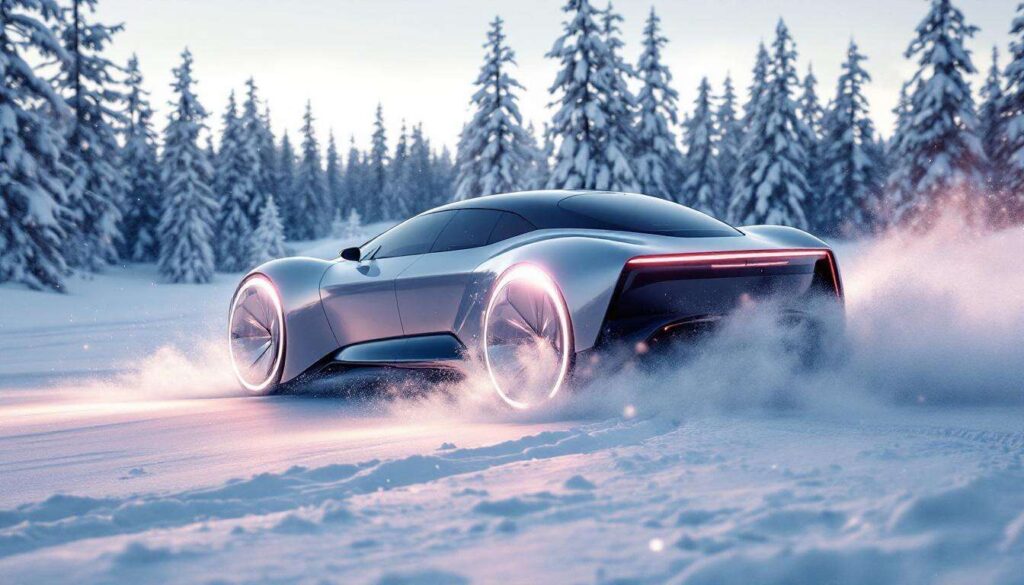
Chinese automotive manufacturer Chery has announced a groundbreaking development in electric vehicle technology that could reshape the industry’s approach to cold-weather performance. The company claims its forthcoming solid-state battery-powered vehicle will deliver an unprecedented range of 932 miles even when operating in temperatures as low as minus 30 degrees Celsius. This assertion positions Chery at the forefront of battery innovation, addressing one of the most persistent challenges facing electric vehicle adoption in colder climates. The LFeng model, set to debut under Chery’s premium Exeed brand, represents a significant leap forward in automotive engineering, combining exceptional range with performance capabilities that rival traditional combustion engines.
Introduction to the revolution in solid-state batteries
Understanding solid-state battery fundamentals
Solid-state batteries represent a paradigm shift from conventional lithium-ion technology. Unlike traditional batteries that rely on flammable liquid electrolytes, solid-state variants utilise solid materials to conduct ions between electrodes. This fundamental difference offers several advantages that have captured the attention of automotive manufacturers worldwide. The technology promises enhanced safety profiles, higher energy density, and improved performance across varying temperature ranges.
Chery’s research and development approach
The development of this technology stems from dedicated research conducted at Chery’s Solid-State Battery Research Institute. The facility focuses on creating practical solutions rather than purely theoretical advancements. Key features of Chery’s approach include:
- Implementation of in situ polymerised solid electrolyte technology
- Integration of manganese-rich cathode materials for enhanced stability
- Achievement of 600 Wh/kg energy density, surpassing current industry standards
- Development of an 800-volt architecture for optimal power delivery
This comprehensive research foundation sets the stage for understanding how Chery’s batteries perform under challenging environmental conditions.
Exceptional performance in extreme conditions
Cold-weather capabilities
The claimed ability to maintain full operational capacity at minus 30 degrees Celsius addresses a critical weakness in current electric vehicle technology. Traditional lithium-ion batteries suffer significant range reduction in cold weather, often losing 30 to 40 per cent of their capacity. Chery’s solid-state solution reportedly eliminates this limitation through its unique electrolyte composition and thermal management system.
Performance specifications comparison
| Specification | Chery LFeng | Typical EV (Lithium-ion) |
|---|---|---|
| Range at 20°C | 1,500 km (932 miles) | 400-600 km |
| Range at -30°C | 1,500 km (932 miles) | 240-360 km |
| Energy density | 600 Wh/kg | 250-300 Wh/kg |
| 0-100 km/h acceleration | Under 3 seconds | 4-6 seconds (average) |
Real-world validation strategy
Chery emphasises the importance of practical testing beyond laboratory conditions. The company plans extensive field trials to verify performance claims in actual driving scenarios. This approach demonstrates a commitment to delivering tangible results rather than theoretical specifications. These performance characteristics naturally lead to questions about the underlying technology that makes such achievements possible.
Innovative technology: towards record-breaking range
Energy density breakthrough
The 600 Wh/kg energy density achieved by Chery’s solid-state batteries represents more than double the capacity of conventional lithium-ion cells. This advancement directly translates to extended range without proportionally increasing battery weight or vehicle mass. The manganese-rich cathode composition contributes to this density whilst maintaining thermal stability and longevity.
Safety enhancements
Eliminating flammable liquid components addresses one of the primary safety concerns associated with electric vehicles. The solid electrolyte technology offers:
- Reduced risk of thermal runaway incidents
- Enhanced structural integrity during impact scenarios
- Improved resistance to physical damage and puncture
- Greater operational stability across temperature extremes
Architecture integration
The 800-volt electrical architecture enables faster charging capabilities and more efficient power distribution throughout the vehicle. This system works synergistically with the solid-state battery to maximise performance whilst minimising energy losses. Combined with the top speed of 260 km/h, the LFeng demonstrates that extended range need not compromise driving dynamics. Understanding these technological advances provides context for examining how Chery plans to bring this innovation to market.
Deployment plans and industrial contexts
Production timeline
Chery has established a clear roadmap for bringing solid-state battery technology to consumers. The LFeng model is scheduled for production in 2026, positioning it among the first commercially available electric vehicles to utilise this advanced battery technology. This timeline reflects both ambition and careful planning to ensure manufacturing readiness.
Manufacturing considerations
Scaling solid-state battery production presents unique challenges compared to conventional battery manufacturing. Key factors include:
- Development of specialised production facilities
- Establishment of supply chains for novel materials
- Quality control protocols for solid electrolyte synthesis
- Integration with existing vehicle assembly processes
Market positioning strategy
Launching the LFeng under the premium Exeed brand signals Chery’s intention to position solid-state technology as a high-value proposition. This approach allows the company to recoup development costs whilst building brand prestige in the competitive electric vehicle segment. The strategic implications of this technological advancement extend beyond Chery’s immediate product portfolio.
Implications for the electric vehicle market
Competitive landscape shifts
Chery’s announcement intensifies the race among manufacturers to commercialise solid-state battery technology. If the company successfully delivers on its performance claims, it could establish a significant competitive advantage in markets where cold-weather performance and extended range are paramount considerations. This development may accelerate investment and research efforts across the industry.
Consumer adoption factors
Addressing range anxiety and cold-weather limitations removes two major barriers to electric vehicle adoption. The combination of 932-mile range and consistent performance in extreme temperatures could:
- Expand the addressable market to include northern regions with harsh winters
- Reduce the need for extensive charging infrastructure in remote areas
- Enhance the practicality of electric vehicles for long-distance travel
- Improve total cost of ownership through reduced charging frequency
Industry standards evolution
Success of Chery’s solid-state implementation may establish new performance benchmarks for the industry. This could influence regulatory standards, consumer expectations, and competitive dynamics across global markets. The technology’s proven viability in production vehicles would validate years of research investment throughout the automotive sector.
Conclusion and future perspectives
Chery’s assertion that its solid-state battery electric vehicle can achieve 932 miles of range at minus 30 degrees Celsius represents a potentially transformative development in automotive technology. The LFeng model’s combination of exceptional range, robust cold-weather performance, and impressive acceleration capabilities addresses longstanding limitations of electric vehicles. With production scheduled for 2026, the company positions itself as a pioneer in commercialising solid-state battery technology. The 600 Wh/kg energy density and elimination of flammable components offer both performance and safety advantages over conventional lithium-ion systems. Whether Chery can successfully deliver on these ambitious claims will significantly influence the trajectory of electric vehicle development and consumer adoption worldwide.