

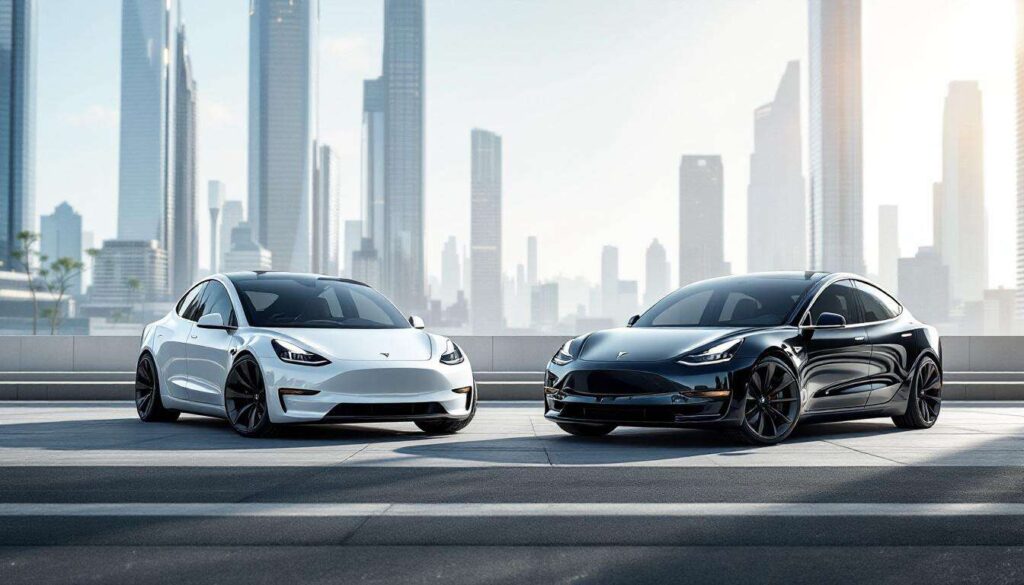
Electric vehicle manufacturer Tesla has achieved a remarkable milestone as both its Model Y and Model 3 have been declared the safest vehicles evaluated by the Australasian New Car Assessment Programme. The independent safety authority’s comprehensive testing procedures have placed these two electric vehicles at the pinnacle of automotive safety standards, setting a new benchmark for manufacturers worldwide. This recognition underscores Tesla’s commitment to passenger protection and advanced safety technologies, whilst highlighting the evolving landscape of vehicle safety assessment.
Introducing the ANCAP 2026 results
ANCAP’s rigorous testing methodology
The Australasian New Car Assessment Programme has refined its evaluation criteria to reflect contemporary safety challenges and technological advancements. The testing protocol encompasses multiple collision scenarios, including frontal offset, side impact, and pole tests, alongside assessments of active safety systems. ANCAP’s updated framework places particular emphasis on vulnerable road user protection, examining how vehicles perform in pedestrian and cyclist collision scenarios.
The assessment programme evaluates vehicles across four primary categories:
- Adult occupant protection during various crash configurations
- Child occupant safety measures and restraint systems
- Vulnerable road user protection capabilities
- Safety assist technologies and their effectiveness
Record-breaking scores for Tesla vehicles
Both Tesla models achieved exceptional ratings across all assessment categories, with the Model Y securing 95.2% for adult occupant protection and the Model 3 attaining 94.8%. These figures represent the highest scores recorded in ANCAP’s testing history. The vehicles demonstrated outstanding structural integrity during crash tests, with minimal intrusion into the passenger compartment even under severe impact conditions.
| Category | Model Y Score | Model 3 Score |
|---|---|---|
| Adult Occupant | 95.2% | 94.8% |
| Child Occupant | 91.7% | 90.9% |
| Vulnerable Road Users | 88.4% | 87.6% |
| Safety Assist | 96.1% | 95.8% |
These outstanding results have established a new standard for manufacturers seeking to achieve top-tier safety ratings, demonstrating that electric vehicle architecture can provide superior protection compared to traditional combustion engine designs.
Why Tesla models dominate in safety
Structural advantages of electric vehicle design
Tesla’s battery-electric architecture provides inherent safety benefits that traditional vehicles cannot match. The absence of a combustion engine allows for an extended crumple zone at the front of the vehicle, which absorbs impact energy more effectively during collisions. The battery pack, positioned low in the chassis, creates a lower centre of gravity that significantly reduces rollover risk whilst providing additional structural reinforcement to the vehicle’s underbody.
Advanced driver assistance systems
Tesla’s comprehensive suite of active safety technologies played a crucial role in achieving these exceptional ratings. The vehicles incorporate multiple systems that work in concert to prevent accidents:
- Automatic emergency braking with pedestrian and cyclist detection
- Lane departure warning and lane keeping assist
- Blind spot monitoring with intervention capabilities
- Adaptive cruise control with traffic-aware functionality
- Emergency lane departure avoidance
The integration of these systems through Tesla’s central processing unit enables faster response times and more sophisticated decision-making compared to conventional implementations where individual systems operate independently.
Continuous improvement through over-the-air updates
Unlike traditional manufacturers, Tesla possesses the capability to enhance safety features remotely through software updates. This means that safety improvements can be deployed to existing vehicles without requiring physical recalls or dealership visits. Recent updates have refined emergency braking algorithms, improved object detection capabilities, and enhanced the responsiveness of collision avoidance systems, ensuring that Tesla vehicles continue to improve throughout their operational lifespan.
Understanding the specific features that contribute to these safety achievements requires a closer examination of each model’s individual characteristics.
Specifications of the Tesla Model Y
Physical dimensions and structural composition
The Model Y’s compact SUV format combines practicality with protection. Measuring 4,751mm in length, 1,921mm in width, and 1,624mm in height, the vehicle provides substantial interior space whilst maintaining manageable external dimensions. The body structure incorporates a combination of ultra-high-strength steel and aluminium alloys, strategically positioned to maximise energy absorption during impacts whilst minimising weight.
Safety-specific features
The Model Y incorporates numerous passive safety elements designed to protect occupants in collision scenarios:
- Eight airbags including front, side, curtain, and knee protection
- Reinforced door sills to resist side impact intrusion
- Laminated acoustic glass that provides enhanced structural integrity
- ISOFIX anchor points with top tether for child seat installation
- Pyrotechnic seatbelt pre-tensioners with load limiters
Battery safety considerations
Tesla’s battery pack design incorporates multiple layers of protection to prevent thermal events and maintain structural integrity during accidents. The individual cells are housed within a reinforced enclosure that forms part of the vehicle’s structural floor, whilst sophisticated monitoring systems continuously assess battery health and temperature. In the event of a collision, the battery management system can automatically isolate damaged sections and deploy cooling measures to prevent thermal propagation.
Whilst the Model Y excels as a versatile family vehicle, the Model 3 offers similar safety credentials in a more compact saloon configuration.
Performance analysis of the Tesla Model 3
Crash test performance breakdown
The Model 3 demonstrated exemplary protection across all impact scenarios evaluated by ANCAP. In frontal offset testing, the vehicle’s structure remained stable with minimal deformation of the passenger compartment. Dummy readings indicated low risk of serious injury to occupants, with particularly impressive chest and leg protection scores. The side impact assessment revealed effective door reinforcement and side airbag deployment, protecting both driver and rear passengers from intrusion and contact injuries.
Pedestrian protection measures
ANCAP’s testing revealed that the Model 3 provides above-average protection for pedestrians and cyclists in collision scenarios. The vehicle features:
- A bonnet design with sufficient clearance to underlying hard structures
- Energy-absorbing materials in the front bumper and bonnet leading edge
- Active bonnet lift system that deploys in pedestrian impacts
- Automatic emergency braking calibrated for vulnerable road user detection
Visibility and lighting systems
The Model 3’s safety performance extends beyond crash protection to include features that help prevent accidents from occurring. The vehicle’s LED lighting system provides exceptional illumination whilst consuming minimal power. The adaptive headlights automatically adjust beam patterns based on vehicle speed, steering angle, and detected traffic, ensuring optimal visibility without dazzling oncoming drivers. The minimalist interior design, centred around a single touchscreen interface, reduces visual distractions whilst maintaining access to essential vehicle information.
These achievements by Tesla reflect broader trends within the automotive sector regarding the prioritisation of occupant and road user safety.
The importance of safety in the automotive industry
Regulatory frameworks and consumer expectations
Safety has evolved from a secondary consideration to a primary purchasing criterion for modern vehicle buyers. European and Australasian regulatory bodies have progressively strengthened requirements for both passive and active safety systems, mandating features that were once considered optional equipment. Consumer awareness of safety ratings has increased substantially, with many buyers consulting ANCAP and Euro NCAP assessments before making purchase decisions. This shift has compelled manufacturers to invest heavily in safety research and development.
Economic implications of safety performance
Vehicles achieving high safety ratings benefit from reduced insurance premiums, improved resale values, and enhanced brand reputation. Insurance companies increasingly differentiate premiums based on safety technology fitment, recognising that advanced driver assistance systems correlate with lower claim frequencies and severities. Fleet operators prioritise safe vehicles to minimise liability exposure and demonstrate duty of care to employees. These economic factors create a virtuous cycle where safety investment generates tangible returns.
Technological advancement driving safety improvements
The rapid development of sensor technology, processing power, and artificial intelligence has enabled safety systems that were unimaginable a decade ago. Modern vehicles can detect and respond to hazards faster than human drivers, intervening to prevent or mitigate collisions. The progression towards autonomous driving capabilities relies fundamentally on these safety technologies, with each advancement in collision avoidance contributing to the eventual realisation of fully self-driving vehicles.
Tesla’s safety achievements carry particular significance for European markets where stringent standards and environmental considerations shape consumer preferences.
Implications for the European car market
Competitive pressure on established manufacturers
Tesla’s safety dominance places considerable pressure on traditional European manufacturers who have historically led in safety innovation. Brands such as Volvo, Mercedes-Benz, and Volkswagen must now contend with an American electric vehicle manufacturer setting new benchmarks in occupant protection. This competitive dynamic is accelerating safety development programmes across the industry, with established manufacturers investing billions in advanced driver assistance systems and structural improvements to match Tesla’s performance.
Influence on purchasing decisions
European consumers demonstrate high sensitivity to safety ratings, with Euro NCAP assessments significantly influencing vehicle selection. Tesla’s ANCAP results, whilst conducted in Australasia, utilise comparable testing protocols to European assessments, providing relevant information for European buyers. The vehicles’ safety credentials strengthen Tesla’s position in markets where environmental concerns and safety consciousness converge, particularly in Scandinavia, Germany, and the Netherlands where electric vehicle adoption rates are highest.
Regulatory alignment and future standards
The European Union continues to enhance safety requirements through regulations mandating advanced safety technologies in new vehicles. Tesla’s current safety feature set already exceeds many upcoming requirements, positioning the manufacturer favourably as regulations tighten. The company’s ability to deploy safety improvements through software updates provides a distinct advantage in maintaining compliance with evolving standards without requiring hardware modifications or vehicle recalls.
Tesla’s achievement of the highest safety ratings awarded by ANCAP represents a significant milestone for electric vehicle technology and automotive safety. The Model Y and Model 3 have demonstrated that electric vehicle architecture can provide superior occupant protection compared to traditional designs, whilst incorporating advanced driver assistance systems that actively prevent collisions. These results validate Tesla’s engineering approach and establish new expectations for safety performance across the automotive industry. As manufacturers worldwide pursue electrification strategies, the safety benchmark set by these Tesla models will influence vehicle development programmes for years to come, ultimately benefiting all road users through enhanced protection and accident avoidance capabilities.