

Electric vehicles have rapidly evolved from niche alternatives to mainstream transport solutions, yet their performance in harsh winter conditions remains a critical concern for many potential buyers. Snow, ice and freezing temperatures present unique challenges that can significantly impact battery efficiency, traction and overall driving experience. Understanding which models excel in these demanding environments has become essential for drivers in colder climates who refuse to compromise on sustainability or performance.
Selection of the best electric vehicles for winter
Tesla Model X: the premium all-weather performer
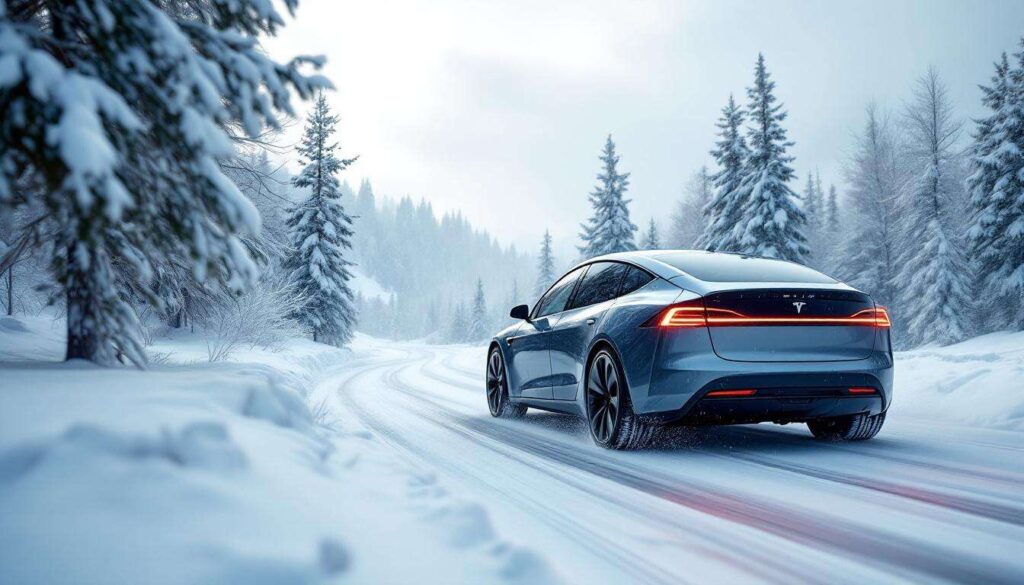
The Tesla Model X continues to dominate winter performance rankings thanks to its sophisticated dual-motor all-wheel drive system and exceptional thermal management capabilities. This luxury SUV maintains approximately 80% of its EPA-rated range even when temperatures plummet, a remarkable achievement that sets it apart from many competitors. The vehicle’s advanced battery heating system pre-conditions the cells before driving, ensuring optimal performance from the first kilometre.
- Instant torque distribution to all four wheels for superior traction
- Ground clearance suitable for moderate snow accumulation
- Heated steering wheel, seats and windscreen as standard
- Over-the-air updates that continuously improve cold-weather algorithms
Audi e-tron Premium Plus: German engineering meets winter capability
The Audi e-tron represents a compelling blend of traditional automotive expertise and electric innovation. Its quattro all-wheel drive heritage translates exceptionally well to electric propulsion, delivering confidence-inspiring handling on snow-covered roads. The e-tron’s integrated heating systems work efficiently to maintain cabin comfort without excessively draining the battery, a common weakness in many electric vehicles.
Testing has revealed that the e-tron often surpasses conventional petrol vehicles in traction performance, particularly during acceleration on slippery surfaces. Its weight distribution and low centre of gravity contribute to stability that drivers appreciate when navigating treacherous winter conditions.
Hyundai Ioniq 5: innovative technology for cold climates
The Hyundai Ioniq 5 introduces cutting-edge solutions specifically designed to combat winter range anxiety. Its heat pump technology represents a significant advancement, capable of extending range by up to 10% in freezing temperatures compared to models relying solely on resistive heating. This Korean offering loses merely 12% of its optimal range when temperatures hover around 0°C, an impressive statistic that demonstrates thoughtful engineering.
| Temperature | Range Retention | Heating Efficiency |
|---|---|---|
| 0°C | 88% | High |
| -6°C | 82% | Moderate |
| -12°C | 75% | Good |
Kia EV9: spacious capability for winter adventures
The Kia EV9 enters the winter EV conversation as a formidable three-row SUV that refuses to sacrifice family space for cold-weather performance. Its robust all-wheel drive system and generous ground clearance make it particularly suitable for regions experiencing heavy snowfall. Early reviews highlight its ability to maintain composure on icy roads whilst providing ample interior space for winter gear and passengers.
Polestar 2: Swedish design meets winter expertise
Drawing from Scandinavian automotive traditions, the Polestar 2 demonstrates inherent understanding of winter driving requirements. Its traction control systems have been calibrated specifically for slippery conditions, providing drivers with enhanced safety margins when roads become treacherous. The vehicle’s weight distribution and suspension tuning contribute to predictable handling characteristics that inspire confidence during winter commutes.
These five models represent the current pinnacle of winter-ready electric vehicles, each offering distinct advantages whilst sharing common strengths in cold-weather capability. Their success in challenging conditions demonstrates how far electric vehicle technology has progressed in addressing climate-specific concerns.
Analysis of the winter performance of electric cars
Battery chemistry and cold temperature resilience
The fundamental challenge facing electric vehicles in winter stems from lithium-ion battery chemistry, which experiences reduced efficiency as temperatures drop. Chemical reactions within battery cells slow considerably in cold conditions, limiting the rate at which energy can be released. Modern EVs combat this through sophisticated thermal management systems that maintain optimal battery temperatures even when ambient conditions are hostile.
Pre-conditioning systems allow drivers to warm batteries whilst still connected to charging infrastructure, preserving range that would otherwise be consumed during initial driving. This technology has become increasingly refined, with some manufacturers implementing predictive algorithms that begin warming batteries based on scheduled departure times.
Traction advantages of electric powertrains
Electric vehicles possess inherent traction advantages that become particularly evident in winter conditions. The instant torque delivery characteristic of electric motors allows for precise power modulation, reducing wheel spin on slippery surfaces. All-wheel drive electric vehicles can distribute power between axles with millisecond precision, responding to changing traction conditions faster than any human driver could manage.
- Independent motor control for each axle enables sophisticated torque vectoring
- Regenerative braking provides additional control during deceleration
- Low centre of gravity improves stability on uneven or slippery surfaces
- Weight distribution often favours balanced handling characteristics
Real-world testing methodologies
Comprehensive winter testing involves exposing vehicles to controlled cold environments and real-world conditions across various temperature ranges. Testing protocols typically measure range retention, charging performance, cabin heating efficiency and traction capabilities. The most reliable assessments occur in regions with genuine winter climates, where vehicles face sustained cold exposure rather than brief temperature fluctuations.
Understanding how electric vehicles perform in winter requires examining multiple interconnected factors that influence their capability and efficiency in cold conditions.
Factors influencing EV range in winter
Cabin heating energy consumption
Perhaps the most significant drain on winter EV range comes from cabin heating requirements. Unlike combustion vehicles that utilise waste engine heat, electric vehicles must generate warmth specifically for passenger comfort. Traditional resistive heating systems can consume between 3 to 5 kilowatts continuously, representing a substantial portion of available battery capacity during typical journeys.
Heat pump technology addresses this challenge by moving thermal energy rather than generating it, achieving efficiency improvements of 200-300% compared to resistive heating. This innovation explains why vehicles equipped with heat pumps demonstrate superior winter range retention.
Battery temperature management overhead
Maintaining optimal battery temperature requires energy, creating a parasitic drain that reduces available range. Batteries perform best between 20-25°C, necessitating active heating when ambient temperatures fall below this threshold. The energy required for thermal management varies based on battery size, insulation quality and ambient temperature severity.
| Ambient Temperature | Average Range Retention | Heating Energy Consumption |
|---|---|---|
| 0°C | 78% | Moderate |
| -6°C | 70% | High |
| -12°C | 62% | Very High |
Aerodynamic and rolling resistance changes
Cold air density increases drag forces acting upon vehicles, whilst tyres stiffen in freezing temperatures, increasing rolling resistance. These physical phenomena combine to reduce efficiency even before considering electrical system demands. Winter tyres, whilst essential for safety, typically exhibit higher rolling resistance than summer alternatives, further impacting range.
Charging speed limitations in cold weather
Battery acceptance rates decline significantly when cells are cold, extending charging times and potentially disrupting journey plans. Fast charging a cold battery can cause damage, prompting vehicles to limit charging speeds until adequate temperature is achieved. This protection mechanism, whilst necessary for battery longevity, can frustrate drivers accustomed to rapid charging during warmer months.
Recognising these range-limiting factors enables drivers to implement strategies that mitigate their impact and maximise winter driving efficiency.
Tips for optimising EV range in cold weather
Pre-conditioning strategies
The single most effective technique for preserving winter range involves pre-conditioning whilst connected to mains power. This process warms both the battery and cabin before departure, eliminating the need to consume battery energy for these functions during the initial journey phase. Most modern EVs allow scheduling through smartphone applications, ensuring vehicles are ready at desired departure times.
- Schedule pre-conditioning to complete just before departure
- Warm the cabin to desired temperature whilst still plugged in
- Allow battery thermal management systems to reach optimal temperature
- Consider defrosting windows during pre-conditioning to reduce initial energy demands
Efficient cabin heating practices
Rather than heating the entire cabin volume, targeted heating strategies significantly reduce energy consumption. Heated seats and steering wheels warm occupants directly, requiring far less energy than raising ambient air temperature. Many drivers find that combining moderate cabin heating with seat heating provides adequate comfort whilst preserving range.
Driving technique modifications
Smooth, anticipatory driving becomes even more important during winter months. Aggressive acceleration and heavy braking both reduce efficiency, whilst also potentially compromising traction on slippery surfaces. Maximising regenerative braking through anticipation and gradual deceleration recovers energy whilst maintaining vehicle stability.
Tyre selection and maintenance
Proper winter tyres represent a non-negotiable safety requirement in regions experiencing snow and ice, despite their range impact. Maintaining correct tyre pressures becomes crucial as cold temperatures cause air contraction, reducing pressure and increasing rolling resistance. Regular pressure checks ensure optimal efficiency and safety throughout winter months.
These practical strategies enable drivers to maintain acceptable range whilst ensuring safety and comfort during cold-weather driving. The emphasis now shifts to examining which manufacturers have established leadership in this specialised market segment.
Which brands dominate the winter EV market ?
Tesla’s technological leadership
Tesla maintains a commanding position in winter EV performance through continuous software refinement and comprehensive thermal management systems. The manufacturer’s over-the-air update capability allows constant improvement of cold-weather algorithms, addressing issues and optimising performance without requiring service centre visits. This iterative development approach has resulted in winter capabilities that improve throughout vehicle ownership.
European manufacturers’ cold-climate expertise
German and Scandinavian manufacturers bring decades of winter engineering experience to their electric offerings. Audi’s quattro heritage, refined through countless winter rally competitions, translates effectively to electric powertrains. Polestar’s Swedish origins ensure that winter performance receives priority during development, with extensive testing in Arctic conditions validating design decisions.
Korean innovation in efficiency technology
Hyundai and Kia have emerged as efficiency leaders through aggressive adoption of heat pump technology and advanced battery thermal management. Their willingness to incorporate expensive components as standard equipment, rather than optional extras, demonstrates commitment to delivering genuine winter capability across model ranges. This approach has earned recognition from independent testing organisations and consumer advocates.
Brand reputation in winter performance increasingly influences purchasing decisions, making comparative analysis of specific models essential for informed choice.
Comparison of tested and recommended models
Performance metrics comparison
| Model | Winter Range Retention | AWD Standard | Heat Pump Equipped |
|---|---|---|---|
| Tesla Model X | 80% | Yes | Yes |
| Audi e-tron | 75% | Yes | Optional |
| Hyundai Ioniq 5 | 88% | Optional | Yes |
| Kia EV9 | 78% | Yes | Yes |
| Polestar 2 | 76% | Yes | Yes |
Value proposition analysis
The Hyundai Ioniq 5 emerges as particularly compelling when considering price-to-performance ratios, offering exceptional winter capability at a more accessible price point than premium competitors. The Tesla Model X commands a significant premium but justifies this through superior range retention and comprehensive feature sets. Audi’s e-tron positions itself as a luxury option with traditional automotive refinement.
Practical considerations for different user profiles
Family buyers requiring three-row seating find the Kia EV9 uniquely positioned to meet their needs without compromising winter capability. Urban drivers prioritising efficiency might favour the Polestar 2’s compact dimensions and predictable handling. Those regularly facing severe winter conditions benefit from the Tesla Model X’s proven track record and extensive charging infrastructure access.
Electric vehicle technology has matured to the point where winter performance no longer represents an insurmountable obstacle for potential buyers. The five models examined demonstrate that thoughtful engineering can overcome cold-weather challenges whilst delivering the environmental and economic benefits that motivate EV adoption. Range retention figures between 75-88% in freezing conditions prove that electric vehicles can serve reliably throughout the year, even in demanding climates. All-wheel drive systems, heat pump technology and sophisticated thermal management have transformed winter capability from a weakness into a competitive strength for leading manufacturers. Prospective buyers in cold regions can now confidently select electric vehicles knowing that performance, safety and range will meet their requirements regardless of season.