

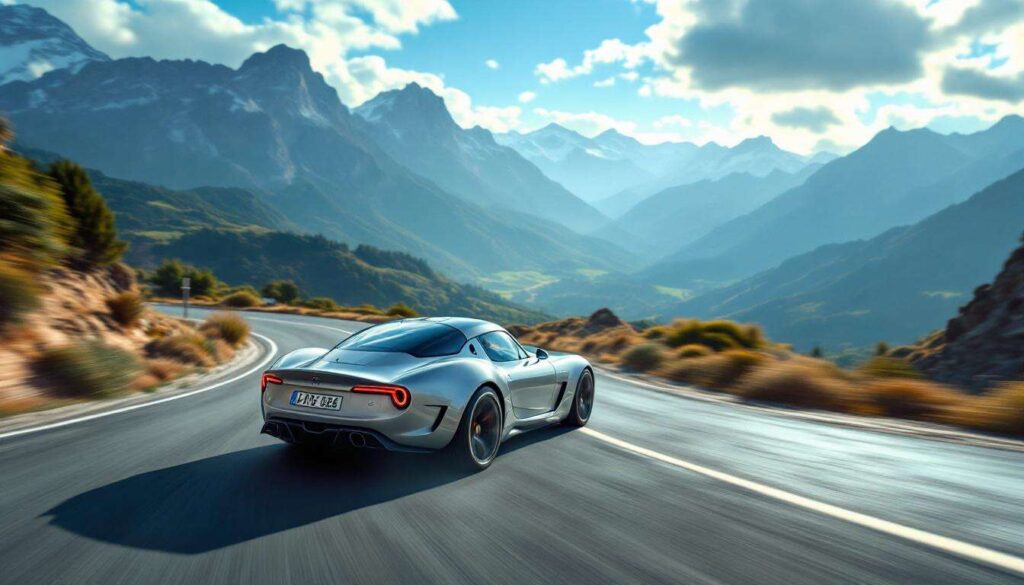
The roar of engines echoing through Italian villages, the thrill of navigating winding mountain passes, and the challenge of maintaining precise timing over hundreds of kilometres: these elements have defined the legendary Mille Miglia for nearly a century. Yet as the automotive world pivots towards electrification, a new chapter has emerged. Electric vehicles are now tackling this historic route, presenting drivers with an entirely different set of obstacles that test both technological limits and human adaptability in ways petrol-powered predecessors never encountered.
Introduction of the concept of the most beautiful race in the world
The Mille Miglia, translating to “thousand miles”, represents one of motorsport’s most storied traditions. Established in 1927, this Italian endurance event originally ran as a high-speed competition from Brescia to Rome and back, covering approximately 1,609 kilometres of public roads. The race attracted the world’s finest drivers and manufacturers, becoming a proving ground for automotive excellence until a tragic accident in 1957 led to its suspension as a competitive speed event.
Evolution into a regularity rally
Following its closure as a race, the Mille Miglia was reimagined as a regularity rally in 1977, preserving its heritage whilst prioritising safety. Participants now navigate the historic route whilst maintaining specific average speeds and adhering to precise time schedules rather than competing for outright speed. This format has allowed classic automobiles to continue traversing the legendary course, celebrating automotive history and Italian culture.
The emergence of Mille Miglia Green
Recognising the automotive industry’s shift towards sustainability, organisers introduced the Mille Miglia Green, an event exclusively for fully electric vehicles. This modern iteration challenges participants to complete extensive distances using zero-emission technology, demonstrating that environmental consciousness and competitive spirit need not be mutually exclusive. The event has rapidly grown in significance, with recent editions covering over 2,000 kilometres across five days.
This evolution from petrol-powered competition to electric endurance challenge raises fundamental questions about how modern technology adapts to historic motorsport traditions.
The technical challenges of driving an EV
Operating an electric vehicle in a multi-day endurance event presents unique technical hurdles that differ substantially from conventional motorsport. Drivers must master an entirely new skill set whilst maintaining the precision required for regularity rally success.
Regenerative braking dynamics
Unlike traditional vehicles with consistent braking characteristics, electric vehicles employ regenerative braking systems that recover energy during deceleration. This technology requires drivers to recalibrate their spatial awareness and braking points, as the deceleration force varies depending on:
- Battery charge level and temperature
- Selected regeneration intensity mode
- Road gradient and surface conditions
- Vehicle speed and momentum
Mastering these variables becomes critical when navigating the Mille Miglia’s demanding mountain passes and historic town centres, where precise timing depends on consistent braking performance.
Weight distribution and handling characteristics
Electric vehicles typically carry substantial battery packs positioned low in the chassis, fundamentally altering weight distribution compared to traditional sports cars. The Kia EV6 GT, which achieved sixth place overall in the 2023 Mille Miglia Green, demonstrates how modern EVs balance this additional mass. However, drivers must adapt to different cornering dynamics and weight transfer patterns throughout the demanding route.
Real-time performance monitoring
Electric vehicles provide extensive telemetry data, requiring drivers to monitor multiple parameters simultaneously. Beyond traditional speedometer readings, EV pilots must track instantaneous energy consumption, remaining range predictions, battery temperature, and regeneration efficiency. This information overload can prove distracting during the intense concentration required for regularity rally navigation.
These technical adaptations form only part of the challenge, as the fundamental question of energy management looms over every kilometre.
Managing range and charging strategy
Perhaps the most defining characteristic of electric vehicle endurance racing involves meticulous energy management. Unlike refuelling a petrol vehicle in minutes, charging an EV requires strategic planning that can make or break a team’s performance.
Range anxiety in competitive contexts
Whilst modern electric vehicles offer impressive ranges under optimal conditions, the Mille Miglia’s varied terrain and pace requirements create unpredictable energy consumption patterns. Drivers face the constant mental burden of calculating whether their remaining charge will reach the next designated charging point, particularly when navigating:
- Steep alpine climbs that drain batteries rapidly
- High-speed motorway sections with increased air resistance
- Urban areas with stop-start traffic patterns
- Adverse weather conditions affecting efficiency
Charging infrastructure limitations
The charging network along the historic Mille Miglia route presents logistical complications. Teams must coordinate with organisers to ensure adequate charging facilities at designated stops, yet several factors complicate this process:
| Challenge | Impact on Strategy |
|---|---|
| Charger availability | Multiple teams competing for limited charging points |
| Charging speed variations | Different infrastructure capabilities affecting stop duration |
| Power grid capacity | Potential limitations in rural areas along the route |
| Compatibility issues | Ensuring vehicle charging systems match available infrastructure |
Strategic charging decisions
Successful teams develop sophisticated charging strategies that balance speed with energy security. The British duo piloting the Kia EV6 GT demonstrated this through their section victories, likely employing tactics such as partial charging to minimise stop duration whilst ensuring sufficient range reserves. This approach requires constant recalculation based on actual consumption versus predicted usage.
Yet energy management represents only one dimension of the performance equation, as drivers must simultaneously optimise their velocity.
Speed dilemma: finding the right pace
Electric vehicle drivers in the Mille Miglia Green face a complex optimisation problem: balancing competitive pace with energy conservation whilst maintaining regularity rally precision.
Energy consumption versus speed relationship
The physics of electric vehicle efficiency create a non-linear relationship between speed and range. Aerodynamic drag increases exponentially with velocity, meaning that modest speed reductions can yield substantial energy savings. Drivers must constantly evaluate whether maintaining higher speeds justifies the corresponding reduction in available range, particularly when approaching sections with limited charging opportunities.
Performance modes and their trade-offs
Modern performance EVs like the Kia EV6 GT offer multiple driving modes that dramatically alter power delivery and efficiency characteristics. Teams must decide when to employ:
- Sport modes for maximum acceleration and responsiveness
- Eco modes for extended range at reduced performance
- Normal modes balancing efficiency and capability
- Custom settings tailored to specific route sections
These choices directly impact both competitive positioning and energy reserves, requiring sophisticated decision-making throughout the event.
Regularity requirements adding complexity
Unlike traditional racing where maximum speed often determines success, regularity rallies demand precise average speeds over measured sections. Electric vehicle drivers must maintain these target velocities whilst simultaneously managing energy consumption, creating a multidimensional optimisation challenge that petrol vehicle drivers rarely encounter to the same degree.
Beyond the purely competitive and technical considerations, broader questions about sustainability and public perception shape the event’s significance.
Environmental impacts and social acceptability
The introduction of electric vehicles into the Mille Miglia tradition carries symbolic weight beyond mere technological demonstration, representing a statement about motorsport’s environmental future.
Carbon footprint considerations
Whilst electric vehicles produce zero direct emissions during operation, evaluating their true environmental impact requires examining the complete energy chain. The electricity powering these vehicles originates from diverse sources, and the carbon intensity varies significantly across Italy’s regions. Additionally, the environmental cost of battery production and eventual disposal must factor into comprehensive sustainability assessments.
Public perception and acceptance
Events like the Mille Miglia Green serve an educational function, demonstrating electric vehicle capabilities to enthusiasts who might otherwise resist electrification. The successful participation of performance vehicles such as the Kia EV6 GT challenges preconceptions about electric cars being inherently unsuitable for demanding driving applications. This visibility helps normalise EVs within automotive culture, potentially accelerating broader adoption.
Balancing tradition with innovation
The coexistence of classic petrol-powered vehicles in the traditional Mille Miglia alongside electric entrants in the Green variant creates interesting cultural dynamics. Some purists view electrification as incompatible with automotive heritage, whilst others recognise it as essential evolution. This tension reflects broader societal debates about preserving tradition whilst embracing necessary environmental progress.
These experiences and observations from the Mille Miglia Green provide valuable insights that extend far beyond a single event.
Lessons learnt for the future of EVs in racing
The participation of electric vehicles in demanding endurance events yields practical knowledge applicable to both motorsport development and consumer vehicle advancement.
Infrastructure development priorities
The charging challenges encountered during the Mille Miglia Green highlight critical infrastructure needs for widespread EV adoption. Key requirements include:
- Expanded fast-charging networks in rural and remote areas
- Standardised charging protocols ensuring universal compatibility
- Grid capacity improvements supporting simultaneous high-power charging
- Reliable charging station maintenance and availability monitoring
Vehicle technology refinements
Competitive environments expose vehicle limitations that might not emerge during standard testing. The Mille Miglia Green experience has likely informed manufacturers about necessary improvements in battery thermal management, energy consumption prediction accuracy, and regenerative braking calibration. These insights directly benefit future consumer models.
Driver training and adaptation
The success of teams like the British duo in the Kia EV6 GT demonstrates that human factors remain crucial despite technological advancement. Developing specific training programmes for electric vehicle operation in demanding contexts will become increasingly important as motorsport continues its electrification journey.
The intersection of historic motorsport tradition and cutting-edge electric technology creates a compelling narrative about automotive evolution. Events like the Mille Miglia Green prove that electric vehicles can tackle demanding endurance challenges whilst highlighting areas requiring further development. The technical hurdles of regenerative braking, weight distribution, and real-time monitoring demand new driver skills, whilst range management and charging strategy introduce planning dimensions absent from traditional racing. Speed optimisation becomes a multifaceted problem balancing performance, efficiency, and regularity requirements. As infrastructure improves and vehicle technology advances, the lessons learnt from these pioneering electric endurance events will shape both competitive motorsport and everyday transportation, demonstrating that sustainability and performance need not remain opposing forces in the automotive world’s ongoing transformation.