



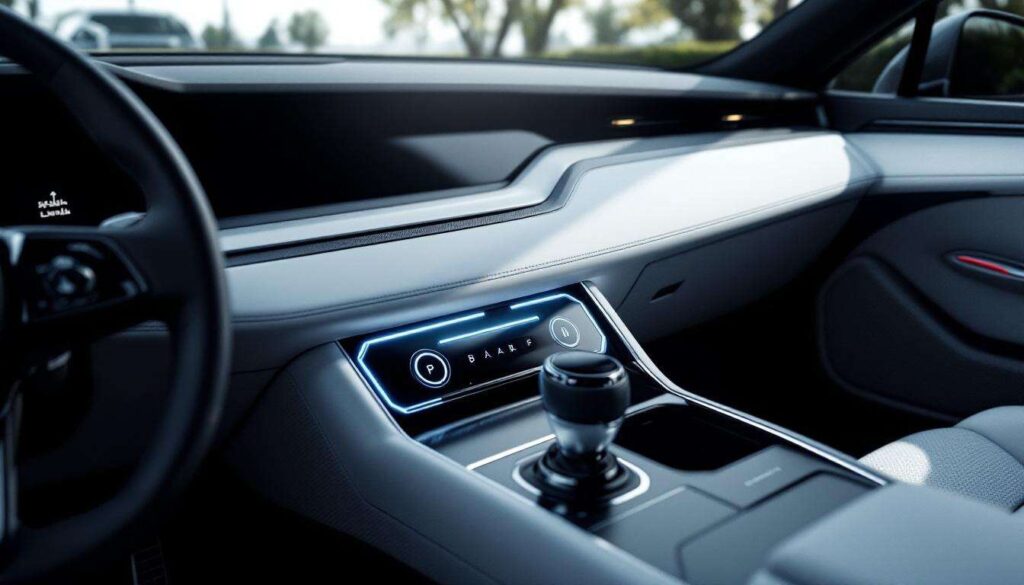
The automotive industry has witnessed a remarkable transformation in recent decades, with technological advancements reshaping nearly every component of modern vehicles. Among these changes, the shift from traditional manual handbrakes to electronic parking brakes represents one of the most significant developments in vehicle design. This transition, which began gaining momentum in the early 2000s, has sparked considerable debate amongst drivers and industry experts alike. Understanding the reasons behind this widespread adoption requires examining the technological, practical, and commercial factors that have driven manufacturers to embrace electronic systems.
The evolution of handbrakes: from manual to electronic
The traditional mechanical system
For over a century, the manual handbrake served as the primary parking brake mechanism in vehicles worldwide. This system relied on a simple yet effective design: a lever positioned between the front seats connected to the rear brakes via steel cables. When the driver pulled the lever, tension in the cables engaged the brake shoes or callipers, securing the vehicle in place. The mechanical simplicity of this design made it reliable and easily understood by drivers and mechanics alike.
The emergence of electronic alternatives
The first electronic parking brakes appeared in luxury vehicles during the late 1990s, with manufacturers such as BMW and Mercedes-Benz pioneering the technology. These early systems replaced the traditional lever with a small button or switch on the dashboard or centre console. By the 2010s, the technology had become increasingly common across various vehicle segments, from family saloons to compact hatchbacks. Several factors contributed to this rapid adoption:
- Advances in automotive electronics and computing power
- Increased focus on interior design flexibility
- Growing consumer expectations for modern features
- Stricter safety regulations requiring enhanced braking systems
This technological progression naturally leads to examining the specific advantages that electronic systems offer over their mechanical predecessors.
The benefits of electronic technology
Space optimisation and interior design
One of the most immediately apparent benefits of electronic parking brakes is the liberation of interior space. Removing the bulky handbrake lever and its associated mechanical components frees up valuable real estate in the centre console. This allows designers to create larger storage compartments, additional cup holders, or more ergonomic layouts for other controls. The aesthetic improvement cannot be understated, as modern interiors appear cleaner and more sophisticated without the intrusive lever.
Operational convenience
Electronic parking brakes offer several practical advantages that enhance the driving experience:
- Automatic engagement when the engine is switched off
- Automatic release when the accelerator is pressed
- Consistent braking force regardless of user strength
- Integration with hill-start assist systems
- No cable stretching or adjustment requirements
Manufacturing and cost considerations
From a manufacturer’s perspective, electronic parking brakes present compelling economic advantages. The table below illustrates key differences in production and maintenance aspects:
| Aspect | Manual Handbrake | Electronic Parking Brake |
|---|---|---|
| Component complexity | Multiple mechanical parts | Fewer physical components |
| Installation time | Labour-intensive | Simplified assembly |
| Maintenance frequency | Regular cable adjustments | Minimal routine maintenance |
| Weight | Heavier system | Lighter overall |
Understanding these benefits provides context for exploring the technical mechanisms that enable electronic parking brakes to function.
How an electronic parking brake works
The core components
An electronic parking brake system comprises several essential elements working in harmony. At its heart lies an electronic control unit that processes inputs from various sensors and switches. Small electric motors, typically integrated into the rear brake callipers, provide the mechanical force needed to clamp the brake pads against the discs. These motors replace the cables and lever mechanism of traditional systems whilst maintaining the fundamental principle of friction-based braking.
The activation process
When a driver activates the electronic parking brake by pressing or pulling a switch, the following sequence occurs:
- The switch sends an electrical signal to the control unit
- The control unit verifies vehicle conditions (speed, transmission position)
- Electric motors engage the brake callipers with precise force
- Sensors confirm successful engagement and provide feedback
- The system monitors brake status continuously
Integration with vehicle systems
Modern electronic parking brakes don’t operate in isolation. They communicate with numerous other vehicle systems, including the engine management system, transmission control unit, and stability control systems. This interconnectivity enables features such as automatic hold functions, which maintain brake pressure at traffic lights, and dynamic brake force distribution. The sophisticated integration demonstrates how electronic brakes form part of a broader vehicle safety architecture, which brings us to their specific safety advantages.
Safety and efficiency: the promises of electronics
Enhanced safety features
Electronic parking brakes contribute to vehicle safety in ways that mechanical systems cannot match. The electronic control unit can apply optimal braking force based on vehicle weight, gradient, and load conditions, ensuring consistent performance regardless of circumstances. In emergency situations, some systems allow drivers to activate the parking brake whilst moving, applying controlled braking force to bring the vehicle to a safe stop if the primary braking system fails.
Preventing roll-away incidents
One of the most significant safety improvements offered by electronic systems is the prevention of unintended vehicle movement. Statistics from various automotive safety organisations indicate that roll-away incidents have decreased in vehicles equipped with electronic parking brakes. The automatic engagement feature ensures that drivers cannot accidentally leave their vehicle without the parking brake applied, a common oversight with manual systems.
Efficiency and environmental considerations
The weight reduction achieved by eliminating mechanical components contributes to improved fuel efficiency, albeit modestly. More significantly, the reduced maintenance requirements mean fewer replacement parts and less waste over the vehicle’s lifetime. Electronic systems also enable more efficient brake pad wear patterns through precise force application, potentially extending component lifespan.
Despite these advantages, the technology has not been universally welcomed, and several legitimate concerns have emerged amongst drivers and industry observers.
The drawbacks and criticisms of electronic brakes
Loss of driver control and engagement
Many driving enthusiasts lament the disconnection that electronic parking brakes create between driver and machine. The tactile feedback and mechanical engagement of a traditional handbrake provided a sense of direct control that a button simply cannot replicate. This criticism extends beyond nostalgia; in certain situations, such as executing handbrake turns or precise control on steep inclines, manual systems offered capabilities that electronic alternatives restrict or eliminate entirely.
Reliability and maintenance concerns
Whilst electronic systems require less routine maintenance, failures can be more complex and expensive to address. The potential issues include:
- Electric motor failures requiring complete calliper replacement
- Software glitches necessitating dealer-level diagnostics
- Battery dependency creating vulnerability if the battery fails
- Limited ability for home mechanics to perform repairs
- Higher replacement costs compared to cable and lever systems
Emergency release complications
A particularly contentious issue concerns emergency release procedures. With a manual handbrake, releasing the brake in an emergency situation is intuitive and requires no power source. Electronic systems, however, may require specific procedures that vary between manufacturers, and some require electrical power to disengage. This has raised concerns amongst safety advocates about scenarios where rapid brake release might be necessary but complicated by system design.
Cost implications for consumers
The table below summarises typical cost differences between manual and electronic parking brake repairs:
| Repair Type | Manual System Cost | Electronic System Cost |
|---|---|---|
| Cable replacement | £80-150 | N/A |
| Motor/actuator replacement | N/A | £300-600 |
| Complete system repair | £150-250 | £500-1,200 |
These considerations prompt reflection on where parking brake technology might develop as automotive engineering continues to advance.
What the future holds for braking systems: perspectives and innovations
Integration with autonomous driving
As vehicles progress towards greater autonomy, electronic parking brakes will play an increasingly crucial role in automated parking and vehicle management systems. Future iterations will likely feature enhanced communication with autonomous driving systems, enabling vehicles to manage parking independently with greater precision and safety. The technology may evolve to include predictive capabilities, anticipating when brake engagement will be necessary based on vehicle positioning and environmental factors.
Emerging technologies and hybrid approaches
Some manufacturers are exploring hybrid solutions that combine electronic control with mechanical backup systems, addressing reliability concerns whilst maintaining the benefits of electronic operation. Additionally, developments in brake-by-wire technology promise even more sophisticated systems that eliminate hydraulic components entirely, relying purely on electronic signals and electric actuators.
Standardisation and regulation
Industry bodies and regulatory authorities are working towards standardising electronic parking brake interfaces and emergency procedures. This standardisation aims to address current inconsistencies between manufacturers that can confuse drivers switching between different vehicles. Future regulations may mandate specific minimum requirements for manual override capabilities and battery-independent release mechanisms.
The transition from manual to electronic parking brakes reflects broader trends in automotive engineering, where electronic systems progressively replace mechanical components. Whilst this shift offers undeniable benefits in terms of convenience, space utilisation, and integration with modern vehicle systems, it also presents challenges regarding cost, repairability, and driver engagement. The technology continues to evolve, addressing early criticisms whilst enabling new capabilities that would be impossible with purely mechanical systems. As the automotive industry moves towards electrification and autonomy, electronic parking brakes will remain an integral component of vehicle design, though manufacturers must balance innovation with reliability and user confidence.