


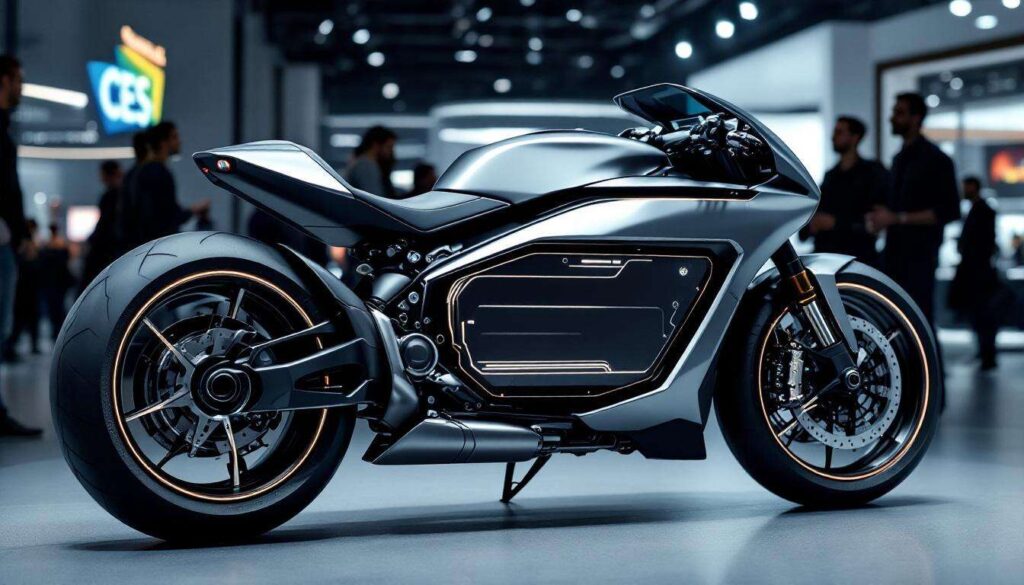
The electric vehicle revolution has reached a pivotal moment with the unveiling of a motorcycle that promises to redefine performance and sustainability standards. Featuring cutting-edge solid-state battery technology, this two-wheeled innovation delivers an extraordinary range that challenges conventional expectations whilst addressing long-standing concerns about charging times and safety. The technology represents years of research finally transitioning from laboratory concepts to tangible consumer products, marking a significant achievement in the pursuit of cleaner, more efficient transportation solutions.
A landmark innovation in the world of motorcycling
The debut at CES 2026
The Consumer Electronics Show has long served as a platform for revolutionary technological announcements, and this year’s event proved no exception. The presentation of the world’s first production motorcycle equipped with solid-state batteries captured the attention of industry experts, environmental advocates, and motorcycle enthusiasts alike. This unveiling represents more than just another electric vehicle launch; it symbolises a fundamental shift in how manufacturers approach energy storage and vehicle design.
Breaking new ground in production vehicles
Whilst numerous automotive manufacturers have invested heavily in solid-state battery research, the transition from prototype to production-ready vehicles has remained elusive. The challenges include:
- Scaling manufacturing processes to meet commercial demands
- Ensuring reliability and consistency across battery units
- Managing production costs to maintain competitive pricing
- Developing supply chains for specialised materials
- Meeting stringent safety and regulatory requirements
The successful deployment of this technology in a consumer motorcycle demonstrates that these obstacles can be overcome, potentially accelerating adoption across the broader automotive sector.
Collaborative development approach
The achievement resulted from a strategic partnership between the motorcycle manufacturer and battery technology specialists. This collaboration enabled the integration of advanced energy storage systems with innovative motor design, creating a cohesive package that maximises both performance and efficiency. The hubless in-wheel motor design complements the battery technology by reducing weight and mechanical complexity whilst improving power delivery.
Beyond the technical specifications, this launch signals a broader shift in how the motorcycle industry approaches electrification and sustainable mobility.
Understanding solid-state battery technology
The fundamental difference from conventional batteries
Traditional lithium-ion batteries rely on liquid or gel electrolytes to facilitate the movement of ions between the anode and cathode. Solid-state batteries, by contrast, employ solid materials for this crucial function. This seemingly simple change delivers profound benefits across multiple performance dimensions.
| Characteristic | Lithium-ion batteries | Solid-state batteries |
|---|---|---|
| Electrolyte type | Liquid or gel | Solid material |
| Energy density | Standard | Significantly higher |
| Fire risk | Present due to flammable electrolyte | Substantially reduced |
| Charging speed | Moderate | Potentially much faster |
| Degradation rate | Gradual capacity loss | Improved longevity |
Enhanced energy density and efficiency
The solid electrolyte enables tighter packing of battery components, resulting in higher energy density within the same physical space. This translates directly to extended range without increasing weight or volume, a critical advantage for motorcycles where space constraints are particularly challenging. The improved efficiency also means that more of the stored energy reaches the motor, reducing waste and enhancing overall performance.
Rapid charging capabilities
One of the most compelling features of this technology is the claimed ten-minute charging time. This dramatic reduction addresses one of the primary concerns preventing widespread electric vehicle adoption: the inconvenience of lengthy charging sessions. The solid-state design facilitates faster ion movement whilst managing heat more effectively, enabling rapid energy transfer without compromising battery health or safety.
These technical advantages create a foundation for practical, everyday use that extends beyond mere range statistics.
An impressive range for riders
The 370-mile capability
The advertised range of 370 miles on a single charge represents a remarkable achievement for electric motorcycles. This distance exceeds the capabilities of most current electric two-wheelers and rivals many petrol-powered models. For context, this range enables:
- Extended touring without range anxiety
- Multiple days of urban commuting between charges
- Flexibility for spontaneous route changes
- Reduced dependence on charging infrastructure availability
- Practical long-distance travel comparable to conventional motorcycles
Real-world riding conditions
Whilst manufacturer claims often reflect optimal testing conditions, the solid-state technology’s inherent efficiency suggests that real-world performance should remain impressive. Factors affecting actual range include riding style, terrain, weather conditions, and payload. However, the substantial buffer provided by the 370-mile specification means that even with typical variations, riders can expect genuinely practical distances between charges.
Comparative analysis with existing models
Current electric motorcycles typically offer ranges between 100 and 200 miles, making this new model’s capability particularly noteworthy. The extended range eliminates one of the primary barriers to electric motorcycle adoption, particularly for riders who regularly undertake longer journeys or lack convenient home charging facilities.
The practical implications of this range extend beyond individual convenience to broader questions about environmental responsibility and operational safety.
Environmental impact and safety
Reduced carbon footprint
Electric motorcycles inherently produce zero tailpipe emissions, contributing to improved air quality, particularly in urban environments. The enhanced efficiency of solid-state batteries means that less energy is required to achieve the same performance, further reducing the overall environmental impact. When charged using renewable energy sources, the carbon footprint decreases even more dramatically.
Enhanced safety profile
The elimination of flammable liquid electrolytes significantly reduces fire risk, a concern that has plagued lithium-ion batteries. The solid-state design is inherently more stable, particularly under mechanical stress or damage. This improved safety profile is especially relevant for motorcycles, which face greater risk of impact compared to enclosed vehicles. Key safety advantages include:
- Lower thermal runaway risk
- Greater structural integrity during collisions
- Reduced risk of electrolyte leakage
- Improved performance across temperature ranges
- Enhanced durability under vibration and mechanical stress
Longevity and resource efficiency
Solid-state batteries typically exhibit reduced degradation compared to conventional lithium-ion cells, meaning they maintain capacity over more charge cycles. This extended lifespan reduces the frequency of battery replacement, conserving resources and reducing waste. The improved durability also enhances the vehicle’s resale value and total cost of ownership.
These environmental and safety considerations have significant implications for how the broader industry approaches future development.
The ramifications for the motorcycle industry
Accelerating electrification timelines
The successful commercialisation of solid-state battery technology in motorcycles may catalyse similar developments across the automotive sector. Motorcycles often serve as testing grounds for new technologies due to their smaller scale and lower production volumes, making them ideal platforms for innovation. This demonstration of viability could encourage larger manufacturers to accelerate their own solid-state programmes.
Competitive pressure and market dynamics
Established motorcycle manufacturers now face pressure to respond to this technological leap. The competitive landscape is shifting rapidly, with traditional performance metrics being redefined. Manufacturers must consider:
- Investment in alternative battery technologies
- Partnerships with battery developers
- Redesigning vehicle architectures to accommodate new systems
- Addressing consumer expectations for range and charging speed
- Balancing innovation with production feasibility
Infrastructure development requirements
Whilst the motorcycle itself represents a significant advancement, realising its full potential requires appropriate charging infrastructure. The ten-minute charging capability demands high-power charging stations capable of delivering the necessary energy transfer rates. This requirement may drive investment in upgraded charging networks, benefiting all electric vehicle users.
As the industry absorbs these developments, attention turns to what happens next in this rapidly evolving landscape.
What to expect after CES 2026
Planned customer deliveries
The manufacturer has announced intentions to begin delivering customer motorcycles equipped with solid-state batteries in the first quarter following the CES unveiling. This relatively short timeline from announcement to delivery suggests substantial preparation and confidence in the production process. Early adopters will provide crucial real-world feedback that will inform future iterations and improvements.
Broader industry adoption
Success with this initial production run could trigger a cascade of similar announcements from competitors. The motorcycle industry’s response will likely include:
- Increased research and development funding for solid-state technologies
- Strategic partnerships between manufacturers and battery specialists
- Accelerated timelines for electric model introductions
- Enhanced performance specifications across product ranges
- Greater focus on sustainable manufacturing practices
Technological refinement and evolution
The first production models represent just the beginning of solid-state battery development. Ongoing refinement will likely yield further improvements in energy density, charging speed, cost reduction, and manufacturing efficiency. As production scales increase, economies of scale should make the technology more accessible across different market segments and price points.
The electric motorcycle landscape stands poised for transformation as these innovations move from concept to reality.
The introduction of solid-state battery technology in a production motorcycle represents a watershed moment for sustainable transportation. The combination of exceptional range, rapid charging, enhanced safety, and environmental benefits addresses the primary concerns that have historically limited electric vehicle adoption. This achievement demonstrates that advanced battery technology can transition successfully from laboratory research to practical consumer products. The implications extend beyond motorcycles, potentially accelerating electrification across the entire automotive sector. As manufacturers begin deliveries and gather real-world performance data, the technology will continue evolving, bringing cleaner, more efficient transportation closer to mainstream reality whilst setting new benchmarks for what riders can expect from electric motorcycles.