



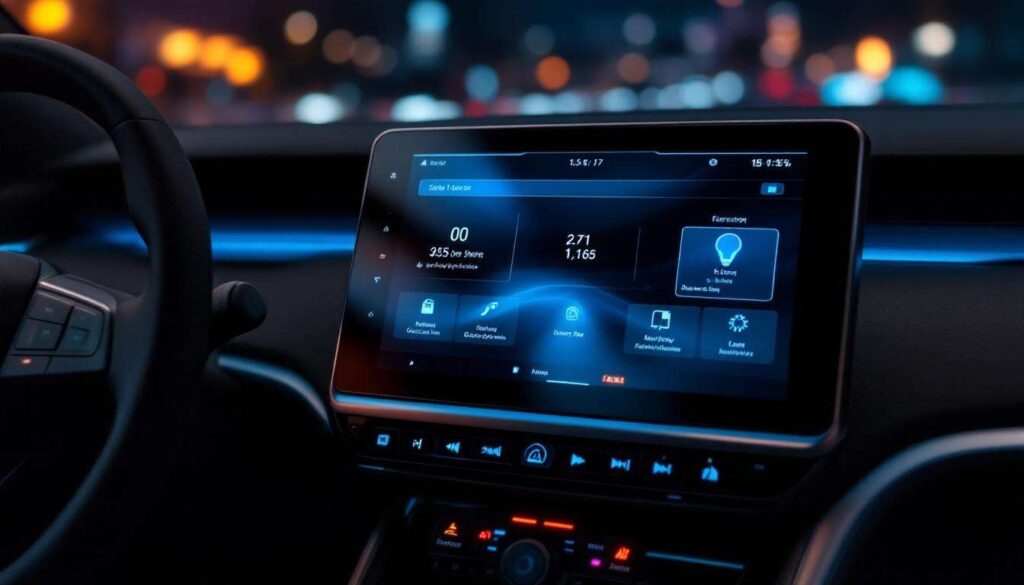
The automotive industry is experiencing a significant shift as concerns about driver safety rise due to the prevalence of large touchscreen interfaces in vehicles. This change raises questions about the efficacy and safety of touchscreen controls versus traditional physical buttons.
The impact of touchscreens on road safety
Evidence linking touchscreens to traffic accidents
Research conducted across multiple jurisdictions has revealed a troubling correlation between touchscreen-dominated vehicle interfaces and increased accident rates. Studies examining driver behaviour demonstrate that operating touchscreen controls requires significantly more visual attention than traditional button-based systems. Drivers must divert their eyes from the road to locate specific functions on a screen, often navigating through multiple menus to access basic features such as climate control or audio settings.
The problem extends beyond simple distraction. Analysis of traffic incident reports indicates that a substantial proportion of accidents involve drivers who were interacting with in-vehicle technology at the time of collision. The cognitive load required to process visual information on a touchscreen whilst simultaneously monitoring road conditions creates a dangerous dual-task scenario that compromises reaction times and situational awareness.
Regulatory bodies respond to safety data
The Australasian New Car Assessment Program has taken decisive action in response to mounting safety evidence. Beginning in January 2026, manufacturers seeking favourable safety ratings must incorporate physical buttons for critical vehicle functions. This policy change represents a watershed moment in automotive regulation, acknowledging that technological advancement must not come at the expense of driver safety.
| Function | Required Control Type (2026) | Previous Standard |
|---|---|---|
| Headlights | Physical button | Touchscreen permitted |
| Windscreen wipers | Physical button | Touchscreen permitted |
| Hazard lights | Physical button | Physical button required |
European regulatory bodies are following similar trajectories, with discussions underway regarding mandatory physical controls for essential functions. This global movement reflects a growing recognition that interface design directly influences road safety outcomes.
These regulatory changes signal a broader re-evaluation of how technology should be integrated into vehicles, setting the stage for examining specific distraction mechanisms.
The distraction caused by touchscreen functionalities
Visual and cognitive demands of touchscreen operation
Operating a touchscreen whilst driving creates multiple layers of distraction that compound safety risks. Unlike physical buttons that provide tactile feedback and can be operated without visual confirmation, touchscreens require drivers to:
- Locate the correct area of the screen visually
- Read text labels or interpret icons
- Precisely target touch areas, often whilst the vehicle is in motion
- Confirm that the intended action has been executed
- Navigate back through menu systems if the wrong option was selected
This process can take several seconds, during which a vehicle travelling at motorway speeds covers considerable distance. The absence of tactile feedback means drivers cannot develop muscle memory for control locations, forcing them to visually verify each interaction.
The complexity of modern touchscreen interfaces
Contemporary vehicle touchscreens have evolved into sophisticated computer systems that control dozens of functions previously managed through dedicated physical controls. This consolidation, whilst reducing dashboard clutter, has created interfaces that require extensive navigation to access basic features. Adjusting cabin temperature might require touching the screen, selecting a climate menu, choosing a temperature setting, and confirming the selection.
The situation worsens in varying lighting conditions. Touchscreens can suffer from glare in bright sunlight or excessive brightness at night, further complicating their use. Physical buttons, by contrast, maintain consistent operability regardless of environmental conditions.
Understanding these distraction mechanisms naturally leads to considering what drivers themselves think about these systems.
Drivers’ opinions on touchscreens
Consumer satisfaction surveys reveal frustration
Surveys conducted by automotive consumer organisations consistently reveal widespread dissatisfaction with touchscreen-dominated interfaces. Many drivers report frustration with the time required to complete simple tasks, the difficulty of operating controls whilst driving, and the counter-intuitive nature of menu-based systems for functions that previously had dedicated buttons.
Particular criticism has been directed at manufacturers who have eliminated physical controls for fundamental safety features. Drivers express concern about having to navigate touchscreen menus to activate headlights or adjust windscreen wipers during adverse weather conditions when attention should be focused entirely on the road.
The generational divide in preference
Interestingly, preference for physical buttons transcends generational boundaries. Whilst younger drivers may be more comfortable with touchscreen technology in general, many still prefer tactile controls for vehicle operation. This suggests the issue is not technological familiarity but rather the fundamental incompatibility between touchscreen interaction and the demands of driving.
Experienced drivers who have operated vehicles with traditional button layouts report missing the ability to adjust controls by feel alone, without diverting attention from the road. This feedback has influenced manufacturers’ decisions to reintroduce physical controls in newer models.
Given these concerns, some manufacturers have promoted voice recognition as an alternative solution worth examining.
The limitations of voice recognition in cars
Technical challenges in automotive environments
Voice recognition systems, often promoted as a hands-free solution to touchscreen distraction, face significant challenges in automotive applications. Road noise, passenger conversations, and audio system output create acoustic environments that confound voice recognition algorithms. Background noise from motorways, construction zones, or inclement weather can render these systems unreliable precisely when drivers most need alternative control methods.
The technology also struggles with accents, speech patterns, and the natural variation in how individuals pronounce commands. This unreliability forces drivers to repeat commands, often with increasing frustration, creating its own form of distraction.
Cognitive distraction persists with voice controls
Research into cognitive load demonstrates that voice-activated systems, whilst eliminating visual distraction, still impose significant mental demands. Drivers must:
- Recall specific voice commands or phrases
- Formulate requests in ways the system will understand
- Process audio feedback from the system
- Verify that the intended action was completed correctly
This cognitive engagement diverts mental resources from driving tasks, potentially compromising hazard detection and response capabilities. Studies measuring driver performance whilst using voice commands show measurable decrements in reaction times and situational awareness.
These limitations have reinforced the argument for returning to simpler, more intuitive control methods.
Why traditional buttons are making a comeback
The ergonomic advantages of physical controls
Physical buttons offer inherent advantages that touchscreens cannot replicate. Tactile feedback provides immediate confirmation that a control has been activated without requiring visual verification. Drivers can develop muscle memory for button locations, enabling operation without conscious thought or visual attention. This allows essential functions to be controlled whilst maintaining focus on the road ahead.
Button design can incorporate different shapes, sizes, and textures to facilitate identification by touch alone. Critical controls can be positioned for optimal accessibility and distinguished through physical characteristics. This intuitive operability reduces cognitive load and minimises distraction.
Manufacturers respond to safety concerns and consumer demand
Several manufacturers have announced plans to reintroduce physical buttons for essential functions in upcoming models. This shift reflects both regulatory pressure and consumer preferences, as well as a growing acknowledgement within the industry that touchscreen proliferation has compromised usability and safety.
These design changes vary in scope, with some manufacturers adopting hybrid approaches that combine touchscreens for complex functions with physical buttons for frequently used controls. Others are implementing more comprehensive returns to button-based interfaces for all primary vehicle functions.
The ongoing debate around the usability of touchscreens versus physical buttons in vehicles underscores the urgent need for designs that prioritise driver safety. As industry standards shift and regulations begin to change, the comeback of buttons may mark a pivotal moment in automotive design that enhances not only user experience, but also the safety of all road users.